Medically reviewed by Dr. Amy Killen, MD, a board-certified physician specializing in hormone optimization and longevity medicine.
Quick Answer
Perimenopause symptoms — including irregular periods, hot flashes, sleep disruption, and mood changes — typically begin in the mid-to-late 40s, though they can start as early as the late 30s. The transition lasts an average of four to eight years and is driven by fluctuating and eventually declining estrogen and progesterone levels. No two women experience it identically.
What Is Perimenopause and When Does It Start?
Perimenopause is the hormonal transition that precedes menopause — defined as 12 consecutive months without a menstrual period. It is not a disease; it is a normal, predictable phase of a woman’s reproductive life driven by ovarian aging.
Most women enter perimenopause between ages 45 and 55, with average onset around age 47. However, a meaningful subset begin experiencing changes before 40 — a condition known as early perimenopause or, in some cases, premature ovarian insufficiency (POI). Smoking, certain cancer treatments, and family history of early menopause can accelerate the timeline.
The underlying mechanism is a decline in viable ovarian follicles. As follicle counts drop, ovulation becomes irregular and hormonal output — primarily estradiol and progesterone — begins to fluctuate erratically before eventually falling. These fluctuations, not just the eventual low levels, drive many of the symptoms women experience during this phase.
The Complete Perimenopause Symptoms Checklist
Perimenopause symptoms vary considerably from woman to woman. Some experience only mild changes; others find the transition significantly disruptive. The following list covers the full spectrum of recognized symptoms organized by category.
Menstrual Changes
- Irregular cycle length (shorter or longer intervals between periods)
- Heavier or lighter flow than usual
- Skipped periods
- Spotting between periods
Vasomotor Symptoms
- Hot flashes (sudden waves of intense heat, often involving flushing and sweating)
- Night sweats
- Cold flashes or chills immediately following hot flashes
Sleep Disturbances
- Difficulty falling or staying asleep
- Early morning waking
- Non-restorative sleep even after adequate hours
Mood and Cognitive Changes
- Irritability and low frustration tolerance
- Anxiety, including new-onset anxiety
- Depressed mood or emotional lability
- Brain fog — difficulty concentrating, word retrieval problems
- Memory lapses
Genitourinary Symptoms
- Vaginal dryness or atrophy
- Pain or discomfort during intercourse (dyspareunia)
- Increased urinary urgency or frequency
- Recurrent urinary tract infections (UTIs)
Sexual Symptoms
- Decreased libido
- Longer time to arousal
- Reduced genital sensitivity
Physical Changes
- Weight gain, particularly around the abdomen
- Joint aches and stiffness
- Headaches or migraines (often cyclical with the menstrual pattern)
- Breast tenderness
- Dry skin and hair thinning
- Heart palpitations
Not every woman will experience every symptom. Hot flashes and irregular periods are the most commonly reported complaints, but cognitive symptoms and genitourinary changes are frequently underreported — in part because women do not always connect them to hormone changes.
Download the free Perimenopause Guide for a printable symptom tracker, hormone testing checklist, and a guide to what to discuss at your next appointment. Get the free guide →
Which Perimenopause Symptoms Come First?
Menstrual irregularity is usually the first sign. Cycle length may shorten by several days — cycles of 21 to 24 days are common in early perimenopause. This happens because progesterone levels tend to decline first, shortening the luteal phase. Women often notice cycle changes years before more dramatic symptoms appear.
Hot flashes and sleep disruption typically follow as estrogen levels begin a more significant decline. Genitourinary symptoms — vaginal dryness, urinary urgency — often develop later and tend to worsen after the final menstrual period if left untreated. Unlike hot flashes, which may resolve on their own, genitourinary symptoms are progressive and rarely improve without intervention.
The fluctuating nature of estrogen during perimenopause means symptoms can appear and disappear. A difficult week of hot flashes may be followed by weeks of relative calm. This variability is normal but can make the transition difficult to navigate without a clear framework.
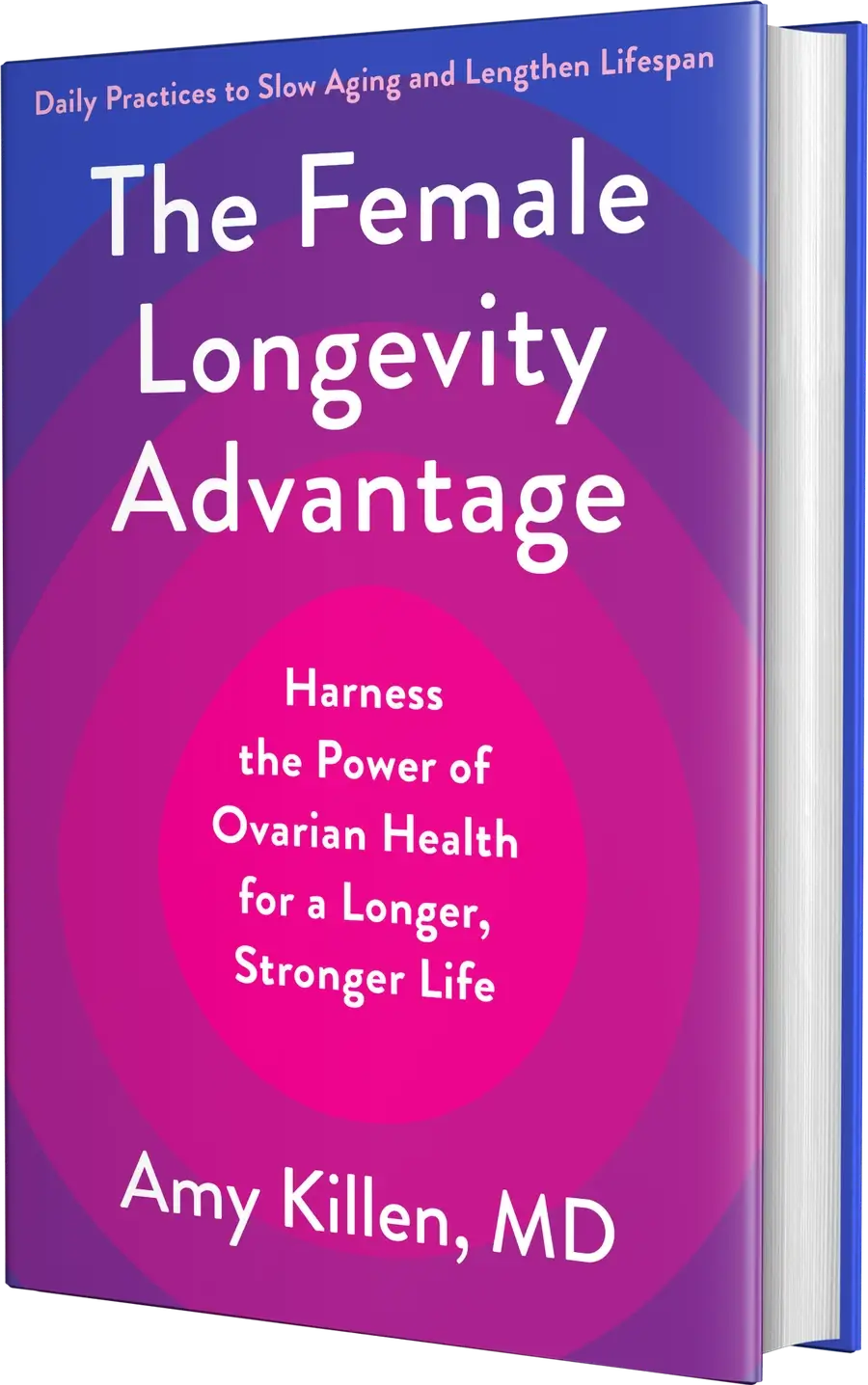
My new book · On sale February 23, 2027
The Female Longevity Advantage
Women outlive men by almost five years. Almost nobody asks why. My book is the playbook for how female bodies actually age, and how to keep the advantage you were born with. Pre-order in any format and get three free bonuses.
How Is Perimenopause Diagnosed?
There is no single definitive test. Diagnosis is primarily clinical — based on age, symptoms, and menstrual pattern. A woman in her mid-to-late 40s with irregular cycles and hot flashes generally does not need laboratory confirmation to begin a treatment conversation.
That said, blood testing is useful in specific situations:
- FSH (follicle-stimulating hormone): Elevated levels — generally above 25 to 30 IU/L — are consistent with ovarian aging, though FSH fluctuates widely in perimenopause and a single value is not definitive
- Estradiol: Often erratic during perimenopause; not reliable as a standalone marker
- Thyroid function (TSH): Many perimenopause symptoms overlap with thyroid dysfunction; testing helps rule this out
- AMH (anti-Müllerian hormone): Reflects ovarian reserve; useful in younger women or when early POI is suspected
If symptoms begin before age 40, evaluation for premature ovarian insufficiency — including FSH measured on two separate occasions at least one month apart — is appropriate.
When Should You See a Doctor About Perimenopause Symptoms?
Seek evaluation if:
- Symptoms are significantly affecting sleep, mood, work, or relationships
- You are younger than 40 and experiencing irregular periods or hot flashes
- Periods are unusually heavy, prolonged, or associated with large clots
- You have new or worsening anxiety or depression
- You want to understand your options — including hormone therapy and non-hormonal treatments
Perimenopause is a legitimate medical transition, not something women must simply endure. Effective, evidence-supported treatments exist, and the decision about which to use should be individualized based on a full clinical picture.
Want more like this? Get my weekly newsletter for clear, evidence-based guidance on perimenopause, hormones, and aging well. Get my weekly newsletter →
Frequently Asked Questions
What are the first signs of perimenopause?
For most women, the earliest sign is a change in menstrual cycle length — typically shorter cycles or increased irregularity. Some women also notice mood changes, sleep disruption, or breast tenderness before hot flashes become prominent.
Can perimenopause start at 35?
Yes, though it is uncommon. Women can enter perimenopause in their late 30s, particularly with a family history of early menopause, a history of smoking, or prior cancer treatment. Symptoms before 40 warrant evaluation to rule out premature ovarian insufficiency (POI).
How long do perimenopause symptoms last?
The perimenopausal transition typically lasts four to eight years, though individual variation is wide. Some women move through it in two to three years; others experience symptoms for a decade or more. Hot flashes can persist for years after the final menstrual period.
Does hormone therapy help perimenopause symptoms?
For many women, yes. Hormone therapy is the most effective treatment for vasomotor symptoms such as hot flashes and night sweats, and also addresses genitourinary symptoms and sleep disruption. Whether it is appropriate depends on individual health history, timing, and personal preference — a conversation best had with a physician who specializes in hormone health.
This article is for educational purposes only and does not constitute individual medical advice. Consult a qualified healthcare provider for evaluation and treatment of your specific symptoms.