Medically reviewed by Dr. Amy Killen, MD, a board-certified physician specializing in hormone optimization and longevity medicine.
Quick answer: For most healthy women who start hormone therapy near the menopausal transition, the current evidence supports a favorable risk-benefit picture — with measurable reductions in cardiovascular disease, fractures, and all-cause mortality. The widespread belief that hormone therapy is dangerous traces back to a single 2002 study (the Women’s Health Initiative, or WHI) whose headline-grabbing percentages masked very small absolute risks, used a specific hormone regimen that is not the same as modern bioidentical therapy, and primarily studied older women many years past menopause. If you have been told HRT is unsafe, the conversation is overdue for an update.
Where the “HRT is dangerous” idea actually came from
In July 2002, the combined-hormone arm of the WHI was halted 5.2 years in — about three years short of its planned duration — after a safety monitoring board judged the risks to outweigh the benefits. The numbers reported at the press conference became infamous: a 26% increased risk of breast cancer, 29% increased risk of heart attack, 41% increased risk of stroke, and a doubled risk of blood clots. Headlines around the world translated those percentages into panic. “Million Women Told: Abandon HRT.” Within months, approximately 88% of women on hormone therapy discontinued it.
That moment reshaped women’s health for two decades. The problem is that the story the headlines told was not the story the data actually supported.
What those WHI numbers actually meant
Two things matter here, and almost no one explained them in 2002.
1. Relative risk is not the same as absolute risk. The “26% increased breast cancer risk” translates to about 8 additional cases per 10,000 women per year. The “29% increased heart attack risk” translates to about 7 additional cases per 10,000 women per year. Those are real numbers, but they are small numbers — and the breast cancer signal was just barely statistically significant (p = 0.049, right at the conventional cutoff).
2. The headlines left out the benefits. The same study showed a 37% reduction in colorectal cancer and a meaningful reduction in fractures — findings that almost never made the front page.
This is the difference between a scary percentage and a real-world risk picture. Both can be true. Only one tells you anything useful about your own decision.
Why the original WHI didn’t apply to most women starting HRT today
This is the part that genuinely changes everything once you understand it.
- Most WHI participants were older. The average age was 63, and many participants were a decade or more past menopause. Hormone therapy started that late behaves differently from hormone therapy started near the transition.
- The hormones used were not modern bioidentical hormones. WHI used Premarin (conjugated equine estrogen, derived from pregnant mare urine) combined with medroxyprogesterone acetate (MPA), a synthetic progestin. That combination is not what most physicians prescribe today — we now use bioidentical estradiol and bioidentical micronized progesterone, which are molecularly identical to the hormones your body has been making your whole life.
- The estrogen-only arm told a different story. Women who took estrogen alone (without the synthetic progestin) had a reduced risk of breast cancer in the WHI, and a substantially reduced breast-cancer mortality rate — a finding that almost never gets mentioned alongside the 2002 headlines.
Subsequent analyses made the picture even clearer. The interpretations released in 2002 were flawed — they failed to account for age at initiation, formulation, and the specific population being studied. As I and many others have written, this single study’s misinterpretation is one of modern medicine’s most significant and costly missteps.
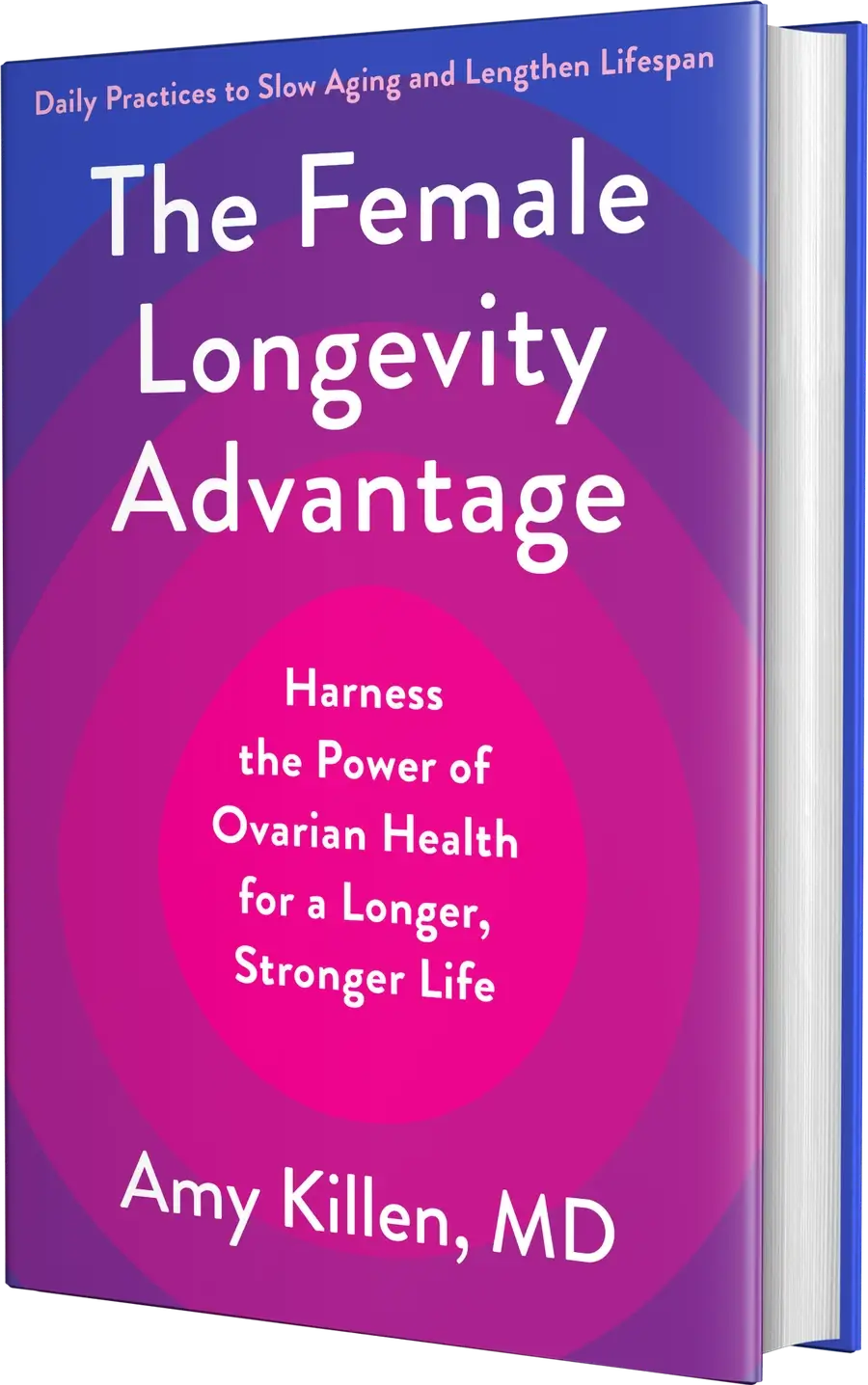
My new book · On sale February 23, 2027
The Female Longevity Advantage
Women outlive men by almost five years. Almost nobody asks why. My book is the playbook for how female bodies actually age, and how to keep the advantage you were born with. Pre-order in any format and get three free bonuses.
What we know now: the “timing” matters more than the medication
Across the observational literature, women who start hormone therapy near menopause — rather than a decade or more after — show striking benefits compared to women who never start it:
- 30–50% reduced all-cause mortality.
- ~40% less cardiovascular disease, the leading cause of death in women.
- 30–40% fewer fractures, including the hip fractures that carry a 25% one-year mortality rate.
- Improvements that compound over time: better bone density, brain protection, more elastic and lubricated genitourinary tissue, fewer recurrent UTIs, better metabolic health, and yes — better skin and hair.
This is what clinicians who work in hormone optimization see in patients every week. Hormone therapy, started in the right window with appropriate formulations, is a longevity intervention hiding in plain sight.
Want a plain-English roadmap? Download the free Perimenopause Guide — a physician’s walkthrough of symptoms, testing, and treatment options, including how to evaluate whether HRT is right for you.
The real cost of the WHI overreaction
One published estimate in the American Journal of Public Health calculated that up to 90,000 women who had had a hysterectomy may have died prematurely as a direct consequence of being denied hormone therapy after the WHI. That estimate is from 2013. The toll has only grown since.
Today, fewer than 5% of women over 50 are on hormone therapy. The most common reason is not that their doctors evaluated them carefully and recommended against it. It is that their doctors were trained in the post-2002 caution and never updated.
So — is HRT safe for you?
The honest answer is that safety is individual. Most healthy women in or near the menopausal transition are excellent candidates. Some women — for example, those with certain active cancers or specific clotting disorders — may need a different approach, or topical-only therapy, or none at all. What matters is that the decision is made on your physiology and history, not on twenty-year-old headlines.
A few questions worth asking any clinician you see about HRT:
- Do you prescribe bioidentical estradiol and progesterone, or older synthetic combinations?
- What is your view on the timing hypothesis and women initiating near menopause?
- How do you individualize dose and route based on symptoms and labs over time?
If the answers are vague or framed entirely around the 2002 findings, you are likely talking to a clinician who has not kept up with the literature.
Frequently asked questions
Does hormone therapy cause breast cancer?
The clearest signal in the WHI came from the combination of conjugated equine estrogen plus a synthetic progestin (MPA). Estrogen alone showed a reduced breast cancer risk in the same study. Across the broader literature, the absolute breast cancer risk from modern bioidentical hormone therapy is small, and the breast cancer mortality rate in women on hormone therapy is often lower than in women who never used it.
Is bioidentical hormone therapy the same as what was studied in the WHI?
No. Bioidentical estradiol and bioidentical micronized progesterone are molecularly identical to your body’s own hormones and are not the same as Premarin or medroxyprogesterone acetate. The WHI did not study them.
Is it too late for me to start HRT?
The evidence is strongest for women who start near the menopausal transition, but the “window” is not a hard wall. A clinician familiar with the timing hypothesis can help you weigh the benefits and risks even if menopause was years ago.
What about heart disease and stroke?
In women who start hormone therapy near menopause, the observational data show roughly 40% less cardiovascular disease, the leading cause of death in women. The increased cardiovascular signals in WHI came largely from older women starting hormones many years after menopause.
Want to cut through the conflicting headlines? Get my weekly newsletter for clear, evidence-based guidance on hormones, HRT, and healthy aging. Get my weekly newsletter →
This article is educational and not a substitute for individualized medical advice.