Medically reviewed by Dr. Amy Killen, MD, a board-certified physician and creator of the HOT Provider Course.
Quick answer: Starting a patient on hormone therapy is a learnable, structured process — not a mystery. You don’t need to be an OB/GYN or endocrinologist to do it well. What you need is a framework: a way to identify her hormonal life stage, gather the right baseline data, screen risk factors honestly, choose an individualized starting therapy, and adjust over time. The framework I use with clinicians in the HOT Provider Course breaks this into five steps. The summary is below; the full protocols, dosing, and decision pathways live in the course itself.
Why most clinicians never learned this in residency
Most physicians I talk to received less than two hours of formal education on treating menopausal women, and even less on hormone therapy itself. That isn’t an indictment of their training programs — it’s a consequence of the post-2002 retreat from hormone therapy that followed the Women’s Health Initiative headlines. A generation of curricula simply stopped teaching it in any practical depth. Meanwhile, women spend roughly 40% of their lives in menopause, and fewer than 5% of those over 50 are on hormone therapy.
If you finished residency with the vague rule of thumb that hormone therapy is dangerous and should be avoided or used minimally, you’re working from outdated dogma rather than current literature. Closing that gap for your own practice is what this is about.
A 5-step framework for starting a patient on HRT
Here is the high-level structure of the approach I teach. Each step has decision rules and details that I work through in the course, but even the outline alone gives you a workable mental model.
1. Know her hormonal life stage
Before you reach for a prescription, you need to place her on the menopausal continuum. Three buckets matter clinically:
- Pre-menopausal — regular cycles, predictable physiology, treatment considerations are different.
- Perimenopausal — cycles becoming irregular (length varies by 7+ days, skipped periods, heavier/lighter flow, worsening PMS); symptoms can begin in the late 30s, but the typical window is 40–55. Premature ovarian insufficiency (POI) is defined as menopause before age 40 and warrants its own workup.
- Menopausal — 12 consecutive months without a period (or surgical menopause after oophorectomy). After 55, menopause is the default assumption.
Life stage shapes both what to prescribe and how to dose it. A common mistake is treating perimenopause as if it were menopause — the fluctuating hormones of perimenopause require a different strategy than the low, stable hormones of established menopause.
2. Get baseline testing
You don’t need to over-order to start a patient safely, but a focused baseline panel does several things at once: it confirms life stage when symptoms are ambiguous, screens for conditions that change the prescription (thyroid disease, anemia, abnormal lipids, abnormal liver function, etc.), and gives you something to measure against when you re-check.
The point is not to chase a number to a target. Hormones — especially in perimenopause — fluctuate too much for a single value to drive a decision. Symptoms drive the plan; labs help frame it.
3. Assess risk factors honestly
Some women genuinely have contraindications to systemic hormone therapy — for example, active hormone-sensitive cancers or specific high-risk clotting profiles. Many more women have relative considerations (smoking, migraines with aura, fibroids, prior VTE, family history of certain cancers) that change the formulation, the route, or the dose — but do not put hormone therapy off the table entirely.
The frequent failure mode here is treating every risk factor as an absolute contraindication and walking the patient away from a therapy that, on a careful look, she is in fact a candidate for. The opposite failure — ignoring real risks — is rarer in current practice but still happens.
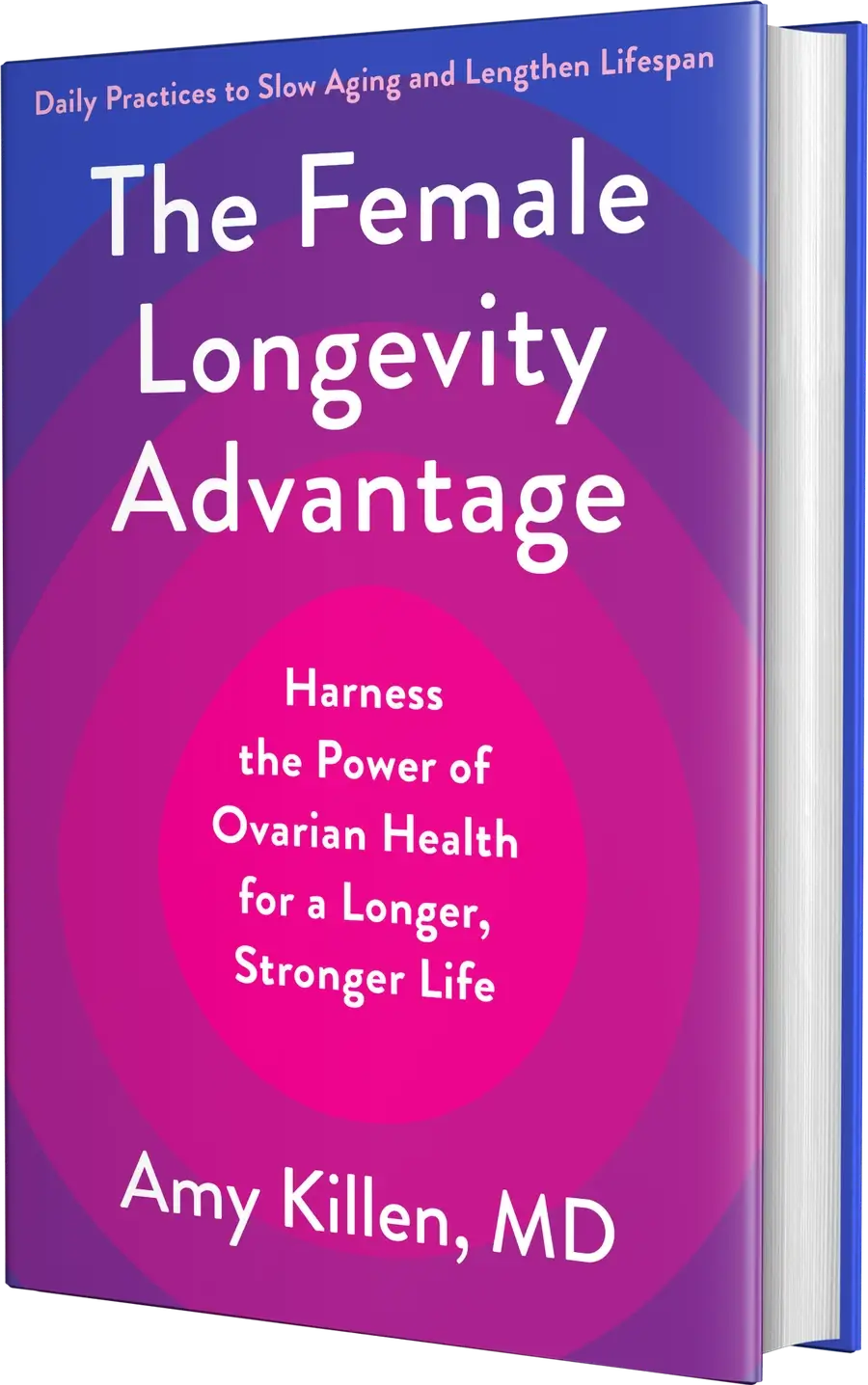
My new book · On sale February 23, 2027
The Female Longevity Advantage
Women outlive men by almost five years. Almost nobody asks why. My book is the playbook for how female bodies actually age, and how to keep the advantage you were born with. Pre-order in any format and get three free bonuses.
4. Choose an individualized treatment path
This is where many clinicians stall, because the right answer for one patient is not the right answer for the next. Estrogen route (transdermal vs. oral vs. vaginal), progesterone type and timing, and the role of testosterone in women all depend on her presentation. In the course I teach this with a framework I call SMARDT, which walks through the individualization decisions in a reproducible way. The point is to give you a method, not a single “starter pack” you apply to everyone.
5. Recheck and adjust
Starting dose is rarely the right long-term dose. Plan to see the patient back in roughly 6–12 weeks for an initial recheck — symptoms, side effects, and a focused lab follow-up — and adjust from there. Most patients require at least one titration. Many require two or three before they hit the right place. Building this expectation into the initial visit prevents the most common discontinuation pattern: a patient on a sub-therapeutic dose who decides hormone therapy “didn’t work” and gives up.
Want the at-a-glance version? Download the free HOT Provider Quick-Start Checklist — the one-page framework I use to evaluate a new patient and decide on initial therapy.
When to start, when to wait, when to refer
The strongest evidence for hormone therapy benefits comes from women who initiate near the menopausal transition rather than many years past it. The often-cited “window of opportunity” is roughly within 10 years of menopause onset or before age 60. That doesn’t mean later starts are off the table — it means the risk-benefit conversation shifts and the formulation choices narrow.
- Start sooner rather than later when a symptomatic perimenopausal or recently menopausal woman with no significant contraindications presents and wants relief and prevention.
- Pause and individualize when she has relative risk factors that change formulation choices (e.g., personal history of certain breast cancers, prior VTE, active migraines with aura, etc.).
- Refer or co-manage for genuinely complex cases — recent breast or endometrial cancer history, complex clotting disorders, or patients who would benefit from a clinician with deep hormone-optimization experience.
What gets clinicians stuck — and how to unstick
The three places I see clinicians most often stall:
- Over-relying on a single lab value. Especially in perimenopause, where day-to-day variability is high. Treat the woman, not the number.
- Defaulting to oral estrogen because it’s familiar. Route matters — in many patients, transdermal estradiol is a more sensible default; this is one of the topics I cover separately, grounded in the data and my own clinical experience.
- Undertreating. A starting dose that produces no clinical effect is not a “cautious” choice; it’s a non-treatment. The remedy is structured titration and clear follow-up.
Frequently asked questions
Do I need to be a hormone specialist to prescribe HRT?
No. If you can titrate antihypertensives or manage diabetes medications, you can absolutely prescribe hormone therapy. The skills are protocol-driven, not specialty-restricted.
What tests should I order before starting?
A focused baseline panel that confirms life stage when ambiguous and screens for treatable comorbidities is appropriate. The exact panel I use is taught in the course; the principle is “targeted, not exhaustive.”
How often should I see a new patient back?
A 6–12 week initial follow-up is reasonable for symptoms, side effects, and a focused lab recheck. Plan for at least one titration; many patients need two or three before the regimen stabilizes.
What if a patient is years past menopause — is it too late?
The evidence is strongest for women initiating within roughly 10 years of menopause or before age 60. Outside that window, individual evaluation matters more; later starts are often still appropriate, but the route and risk-benefit conversation shift.
Ready to make hormone optimization a confident part of your practice? The HOT Provider Course is the structured, on-demand training I built specifically for clinicians who were never taught this in residency — the full 5-step path, the SMARDT framework, dosing, and the current evidence, distilled from over a decade of practice.
This article is educational and not a substitute for clinical judgment, current guidelines, or individualized patient care.