Medically reviewed by Dr. Amy Killen, MD, a board-certified physician and creator of the HOT Provider Course.
Quick answer: Most physicians never learned to prescribe hormone therapy in any depth, and the reason is specific and historical. In 2002, the Women’s Health Initiative (WHI) trial sparked a wave of fear about hormone replacement therapy that emptied an entire generation’s training in it. The result, twenty years later: fewer than 5% of women over 50 are on hormone therapy, fewer than 10% are using vaginal estrogen, and the clinicians caring for them are working from outdated dogma rather than the current literature. The training gap is real, the cost to patients is real, and closing it for your own practice is more straightforward than it looks.
Where the training gap actually came from
I trace it back to a moment in my own family. My mother, then 56 and menopausal, was one of millions of women who abandoned hormone therapy after the WHI headlines hit. She went without estrogen for a decade. By the time she fractured a hip at 76, the bone-protective window had long since closed — and when her physician casually told her to stop her estradiol after surgery, he was acting on the same well-intentioned but outdated thinking that had pushed her off it the first time.
That is the inheritance of 2002. Media coverage of the preliminary WHI results convinced both patients and physicians that hormone therapy increased the risks of breast cancer, heart attacks, strokes, and dementia. Subsequent re-analyses substantially revised that picture — especially for women who initiate therapy near the menopausal transition rather than late — but training programs and standard guidance never fully caught up. Hormone therapy stopped being taught in any practical depth in residency, and an entire cohort of practicing clinicians inherited a vague rule of thumb instead of a working skill: “as low a dose as possible for as short a period as possible.”
That rule of thumb has aged badly. It treats hormone therapy as a brief, reluctant intervention rather than what the evidence increasingly supports — durable, individualized replacement of essential hormones for women in midlife and beyond.
The cost of the gap, in numbers
- Fewer than 5% of women over 50 are on systemic hormone therapy.
- Fewer than 10% of menopausal women receive vaginal estrogen, despite its dramatic effect on genitourinary symptoms and recurrent UTIs.
- 35% of women in perimenopause seriously consider stepping back from their careers, and roughly 10% experience suicidal thoughts — most without ever being offered hormone therapy.
- 25% of patients who fracture a hip die within a year, and half of survivors require long-term care — outcomes estrogen is uniquely positioned to prevent in women.
These are not statistics about a niche population. They are statistics about half of your patient panel, on a problem you were never given the tools to address.
Why the gap persists
- Outdated dogma still in textbooks. The post-2002 framing got encoded into curricula and stuck there even as the literature moved on.
- No specialty fully owns it. Hormone therapy sits between OB/GYN, primary care, and endocrinology, so no single group claims responsibility for teaching it well.
- Visit length. A real hormone optimization conversation does not fit cleanly into a 15-minute slot, so it gets deferred.
- Fear of liability. Many clinicians I talk to are not opposed to hormone therapy — they simply do not feel they have the protocols to defend prescribing it. That is a knowledge problem, not a values problem.
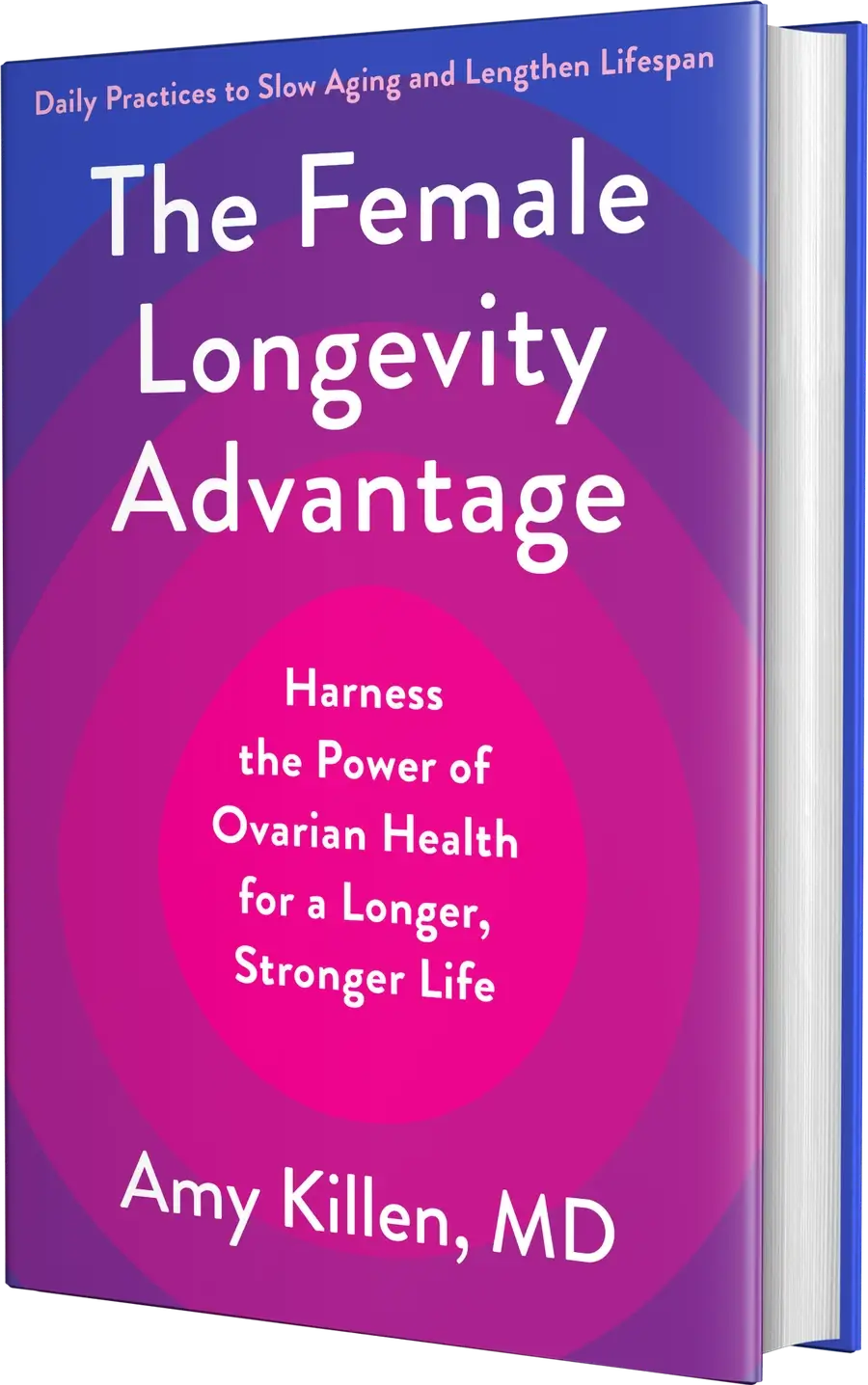
My new book · On sale February 23, 2027
The Female Longevity Advantage
Women outlive men by almost five years. Almost nobody asks why. My book is the playbook for how female bodies actually age, and how to keep the advantage you were born with. Pre-order in any format and get three free bonuses.
You do not need to be an OB/GYN to fix this
One of the most consequential reframes I can offer practicing clinicians: every provider caring for patients over 35 should know how to evaluate and safely prescribe hormones. If you can titrate antihypertensives or manage diabetes medications, you can absolutely prescribe hormone therapy. In fact, many hormone therapies are simpler and safer than the drugs you already use daily.
Family medicine, internal medicine, dermatology, cardiology, urology — hormonal decline affects every organ system, so it touches every specialty. The patients in front of you are already living the consequences of the training gap. You do not need a fellowship to start fixing it.
Want a fast on-ramp? Download the free HOT Provider Quick-Start Checklist — the at-a-glance framework I use to evaluate a new patient and decide on initial therapy.
What competent hormone optimization actually requires
It is less daunting than the training gap implies. The core competencies are learnable in weeks, not years:
- Reading the menopausal transition — recognizing perimenopause despite “normal” labs, knowing when testing helps and when it misleads, and matching symptoms to physiology.
- Hormone therapy fundamentals — estrogen, progesterone, and testosterone in women: appropriate candidates, formulations, starting doses, and follow-up cadence.
- Risk stratification with current evidence — the actual (not headline) risk-benefit picture, especially for healthy women initiating near menopause.
- Individualizing the plan — matching therapy to symptoms, history, and goals, and adjusting based on response rather than rigid protocol.
These are protocols, not mysteries. With a structured framework, most clinicians can become genuinely useful to midlife patients in a matter of weeks.
Frequently asked questions
Do you have to be an OB/GYN to manage menopause and hormone therapy?
No. Family medicine, internal medicine, and many other specialties are well positioned to manage hormone therapy with the right training — and they see the majority of midlife women.
Is hormone therapy still considered safe after the WHI re-analyses?
For most healthy women initiating therapy near the menopausal transition rather than late, the current evidence generally supports a favorable risk-benefit profile. Candidacy is individual, which is exactly why a structured framework matters.
How long does it take to feel competent prescribing?
With a structured curriculum and reasonable case volume, many clinicians feel competent with the fundamentals within a few weeks of focused study.
Why are so few menopausal women on hormone therapy?
Largely because their clinicians were not trained to offer it. Persistent post-WHI caution at the prescribing level is the proximate cause — not patient preference.
Ready to close the gap in your own practice? The HOT Provider Course is the structured, on-demand training I built specifically for clinicians who never learned this in residency — protocols, dosing, and the current evidence, distilled from over a decade of practice.
This article is educational and not a substitute for clinical judgment, current guidelines, or individualized patient care.