This post covers tale two studies two. Two hormone therapy studies landed in my inbox the same week.
The first, built on UK data, says hormone therapy raises your cardiovascular risk. The second, built from 111 million medical records, says it lowers it by nearly a third. Both are peer-reviewed. Both enormous. Both about the same hormones.
My DM’s were flooded with the obvious next question: “So which one is lying?”
Neither. And that’s the whole point of this piece.
I’m not going to give you the full story of hormones and the heart today. I’m going to put these two studies on the witness stand, side by side, and show you how two honest papers can look at the same drug and swear to opposite things. Once you can see the trick, you’ll never read a hormone headline the same way again.
Exhibit A: the study that says hormones hurt your heart
This one used the UK Biobank: 170,250 women who signed up between 2006 and 2010, aged 40 to 69, and were followed for almost 15 years. Big. Serious. A whole heck of a lot of women.
Here is the entire hormone exposure assessment. One question on the enrollment form.
“Have you ever used hormone replacement therapy?”
Say yes and you’re a user. Any age. Any dose. Any type. Any timing. Three months of Premarin in 1994 or an estradiol patch you slapped on that morning: same box.
Imagine a nutrition study that asks “have you ever consumed dairy?” and files the woman who ate one string cheese at a 1996 wedding in the same column as the woman who has been drinking a gallon of whole milk a day since the Clinton administration.
Their verdict: 13% higher risk of cardiovascular disease in the women who said yes to hormones.
That’s the headline. Now let’s cross-examine it.
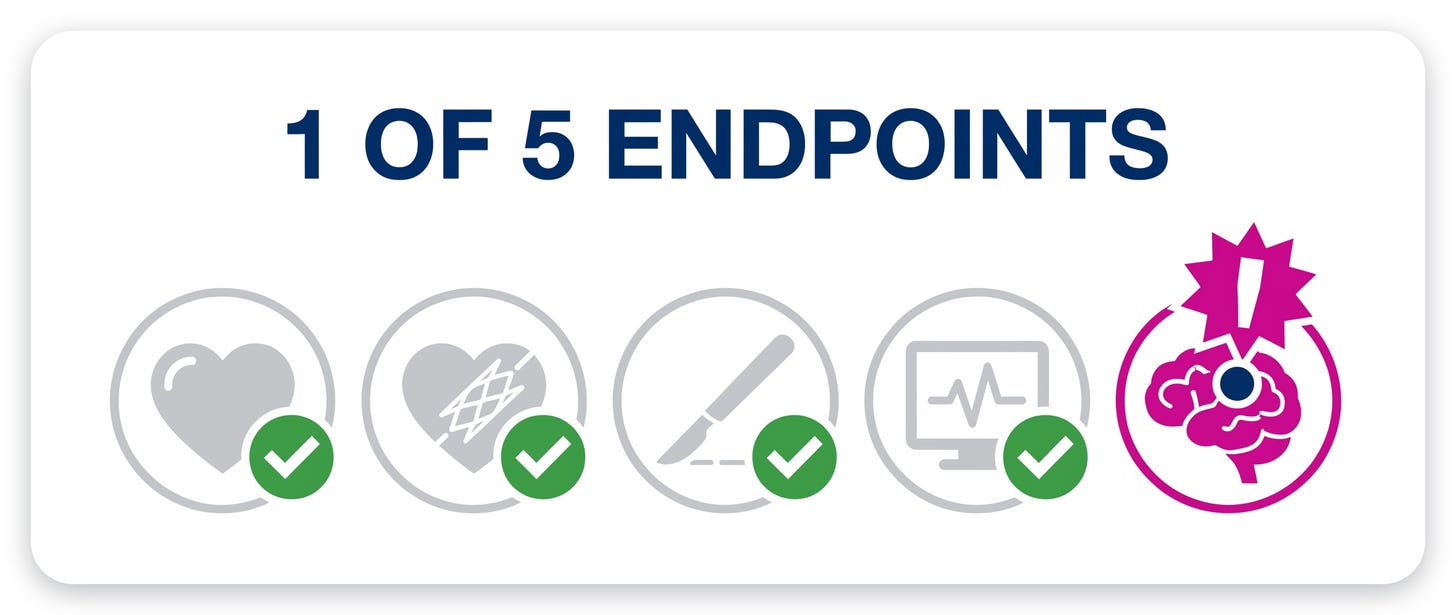
One. It’s one endpoint out of five.
The researchers looked at five outcomes: stroke, coronary heart disease, stents and bypass, AFib, and a grab bag of “other.” Four of the five didn’t budge. The one that moved was stroke, up 14%. The entire headline is riding on stroke.
Stroke matters. But “hormone therapy raises cardiovascular risk” and “hormone therapy in this group was linked to a modest bump in one specific outcome” are two very different sentences, and only one of them fits on a chyron.
Two. Look where the risk actually lives.
When they split the women up by age, the increased risk showed up only in women 45 and under. It’s also the shakiest number in the paper, with an error bar so wide the true effect could be nearly nothing or nearly triple. A shrug with error bars.
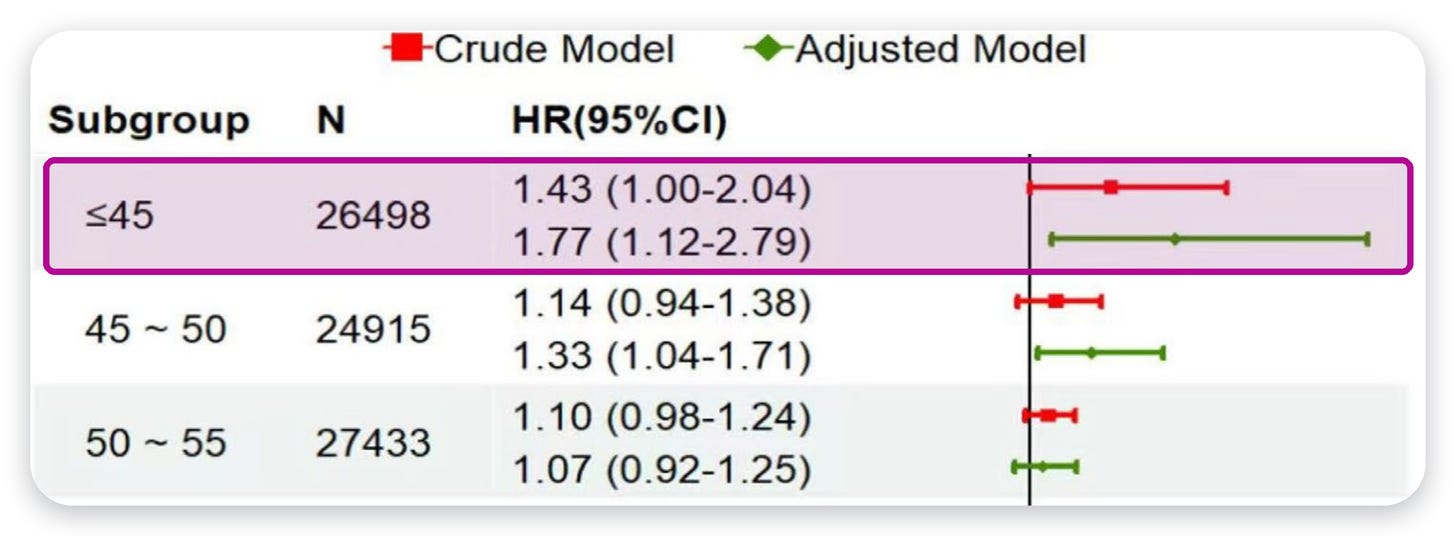
Now think about who those women are. A woman between 40 and 45 who was already on hormone therapy at enrollment is, far more often than not, a woman who went through menopause early, had her ovaries removed, or was deep in a brutal perimenopause. She lost her estrogen early. Her heart risk went up before anyone wrote a prescription. And she’s likely on hormones for years, because she’s replacing what her ovaries were supposed to be making.
The authors admit this in their fine print. They just never connect it to their own under-45 number. Their read is that young women’s blood vessels are “more sensitive” to hormones. I read the same data and see a higher-risk group that got, appropriately, treated.
You are not looking at the effect of hormones on healthy 44-year-olds.
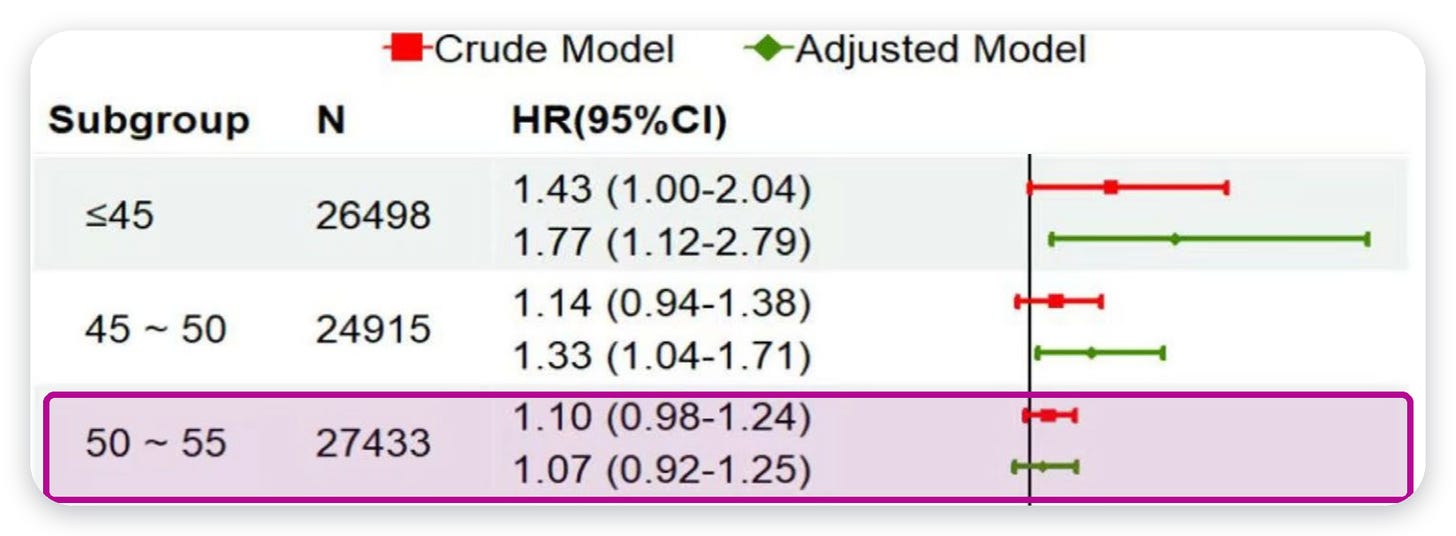
Everywhere else, the numbers are small and they wander. In the 50 to 55 group, where most women actually start: no increased risk at all. At 65 and over: nothing. If hormones were simply bad for arteries, that is not the shape you’d expect. Poison doesn’t skip the middle.
Three. Who takes hormone therapy?
Women with symptoms. Hot flashes, night sweats, the 3 a.m. wake-up call, the rage.
And here’s the part that never makes the headline: women with severe hot flashes already carry higher cardiovascular risk, before anyone treats them. In the SWAN cohort, women with frequent hot flashes had roughly 50 to 80 percent more cardiovascular events than women without them.
The UK Biobank never recorded symptom severity.
So the study compared users to non-users, called the difference “the drug,” and never accounted for the fact that a chunk of it was the reason the women needed the drug in the first place.
Epidemiologists have a name for this. Confounding by indication: the condition that gets you the prescription is itself tied to the outcome you’re measuring. It’s how you conclude that umbrellas cause rain. The authors name it themselves, buried in the limitations. Credit to them for saying so. It just didn’t survive the trip to the press release.
One more thing the Biobank can’t tell you: what these women were actually taking. Pill or patch. Premarin or estradiol. Whether there was a progestogen on board, and which one. And because “ever use” reaches back into the era when oral estrogen plus a synthetic progestin was the default, the old regimens are almost certainly overrepresented.
Almost certainly. The paper can’t say. It doesn’t know.
Exhibit B: the study that says hormones protect your heart
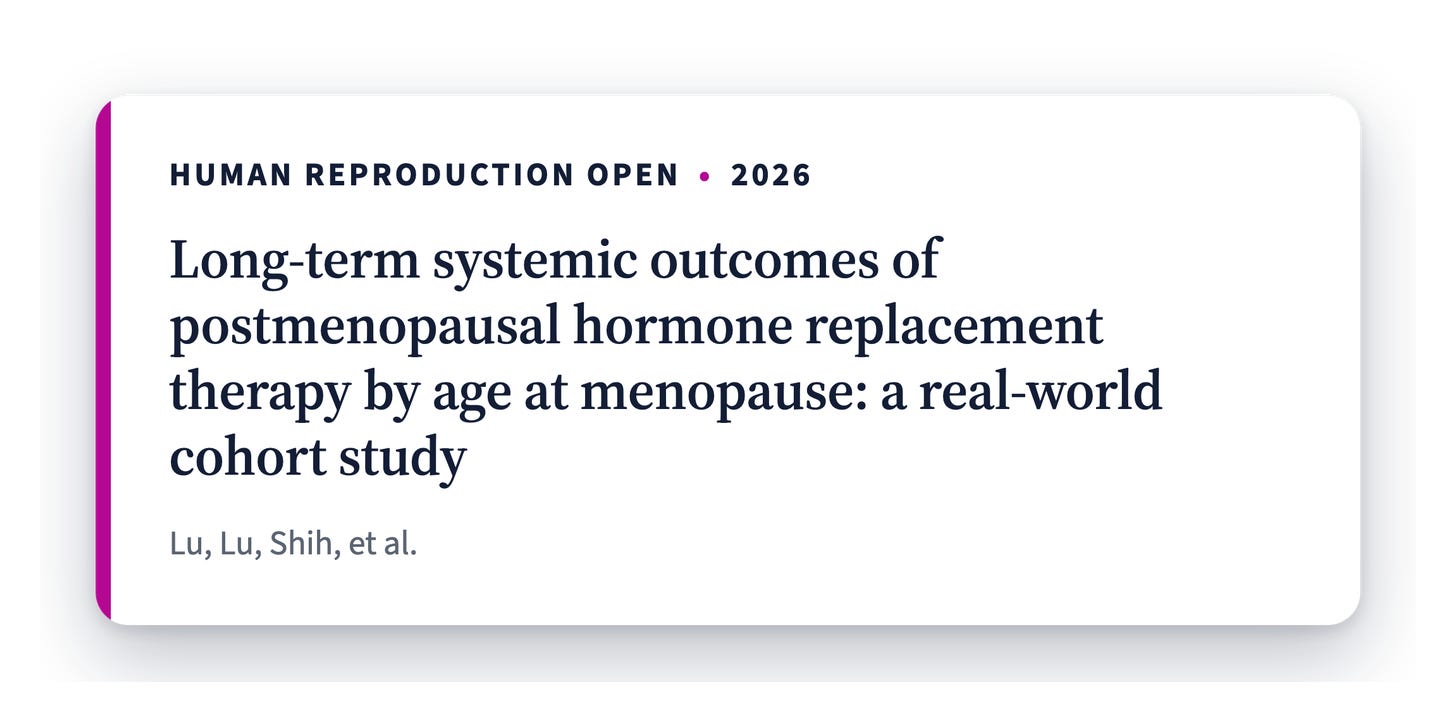
Published in Human Reproduction Open, by a team in Taiwan, using a global network of electronic medical records covering 111 million patients. From that pool, the researchers pulled women with a documented menopause diagnosis and no prior heart disease, diabetes, clots, fractures, or breast or colorectal cancer.
Then they asked a completely different question.
Not “have you ever.” Instead: what happens to women who start hormone therapy within one year of their menopause diagnosis, compared with matched women who never did?
They paired each new user with a non-user of the same age at menopause, race, BMI, and baseline labs, then followed both for at least ten years. Almost 100,000 pairs.
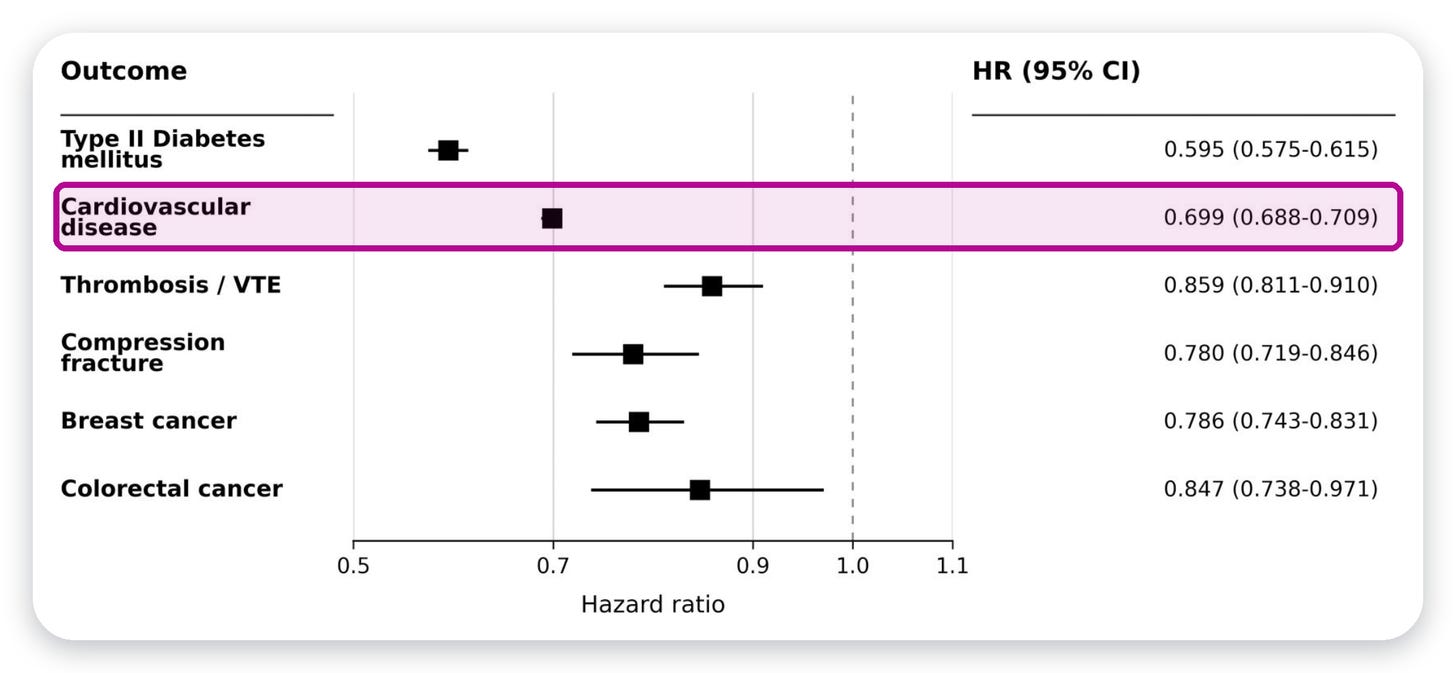
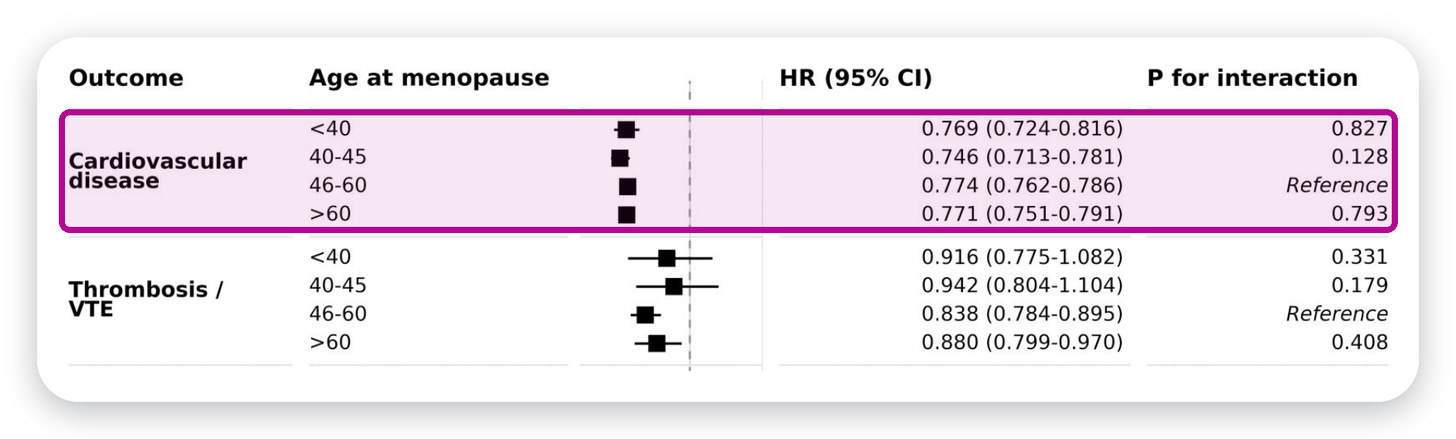
Their verdict: 30% lower cardiovascular disease risk in the early starters.
They also saw 40% less type 2 diabetes, 14% fewer clots, 22% fewer spinal fractures, 21% less breast cancer, and 15% less colorectal cancer.
And the heart benefit held in every age band. Menopause at 38, at 44, at 52, at 61. All of them.
Now. Fairness is the whole game here, so this one goes on the stand too.
It’s observational, same as the first. Women who start hormone therapy within a year of a menopause diagnosis are women with a doctor who’s paying attention, insurance that works, and the habit of showing up. They’re the flossers. That’s healthy-user bias, and it runs in exactly the opposite direction from confounding by indication. It flatters hormone therapy the way the Biobank’s design punished it. Careful matching narrows the gap. It does not close it.
The absolute numbers are smaller than the relative ones. Cardiovascular disease hit about 4.7 percent of hormone users versus 5.3 percent of non-users over ten-plus years. Five or six fewer events per thousand women. Real. Not a force field.
Same blind spot as Study A. The database can’t separate estrogen-only from estrogen-plus-progestogen, can’t see pill versus patch, can’t see dose or duration.
And one finding leans the other way. In women whose menopause arrived after 60, starting hormones was associated with somewhat more breast cancer. One subgroup, one database, no information on dose or type, and an association, not a cause. File it under “worth watching,” not “settled.”
Same hormones. Opposite answer.

It wasn’t the drug. It was the clock.
Study A counted every woman who had ever taken hormones, at any point in her life, in a generation whose prescriptions skewed older, oral, and late. Study B looked only at women who started early and followed them for a decade.
Those aren’t two answers to the same question. They’re two different questions.
A parachute pulled at 10,000 feet and a parachute pulled at 40 feet will produce wildly different survival statistics, and nobody walks away concluding that parachutes are controversial. Same equipment. Different moment.
And when you line these two papers up against twenty years of other research, they aren’t even in conflict. Hormone therapy started near menopause keeps landing on the protective side of the ledger. Started late, it doesn’t. Cardiologists call it the timing hypothesis. Study B is the timing hypothesis in 100,000 pairs. Study A is what it looks like when nobody asks when.
How to read the next headline
Because there will be a next one. When it says hormones are dangerous, ask four questions before you let yourself feel anything.
Dangerous started when? Dangerous delivered how? Dangerous for whom? And dangerous compared to what? (Thirty percent off is a great deal until you notice the sticker price was four dollars.)
If the article can’t answer those, the article isn’t about you, and you might as well toss it into the trash bin next to last night’s take-out.
Tell me in the comments which headline you saw first and what it made you feel. And if there’s a hormone study you want me to put on the witness stand next, drop it below.
Sources
-
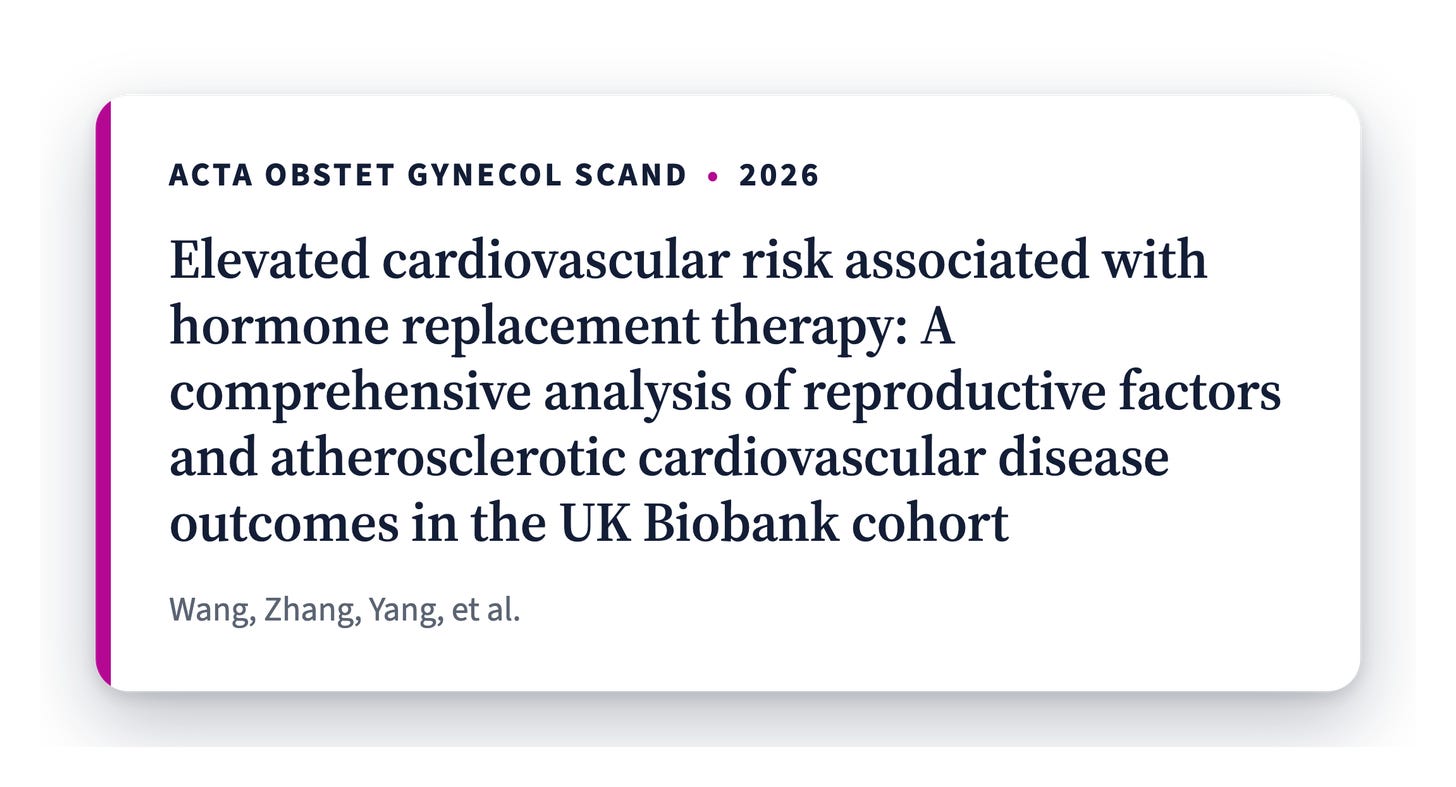
Wang M, Zhang C, Yang C, et al. “Elevated Cardiovascular Risk Associated with Hormone Replacement Therapy: A Comprehensive Analysis of Reproductive Factors and Atherosclerotic Cardiovascular Disease Outcomes in the UK Biobank Cohort.” Acta Obstetricia et Gynecologica Scandinavica, 2026. https://doi.org/10.1111/aogs.70316
-
Lu TF, Lu CH, Shih YH, et al. “Long-Term Systemic Outcomes of Postmenopausal Hormone Replacement Therapy by Age at Menopause: A Real-World Cohort Study.” Human Reproduction Open 2026, no. 3 (2026): hoag072. https://doi.org/10.1093/hropen/hoag072
-
Thurston RC, Aslanidou Vlachos HE, Derby CA, et al. “Menopausal Vasomotor Symptoms and Risk of Incident Cardiovascular Disease Events in SWAN.” Journal of the American Heart Association 10, no. 3 (2021): e017416. https://doi.org/10.1161/JAHA.120.017416
Are you a medical provider? Learn to prescribe hormone optimization therapy with the frameworks, protocols, and confidence you didn’t get in training.
Get Dr. Amy Killen’s Newsletter
Hormones, longevity, and regenerative medicine — straight talk from a physician who actually prescribes it. Free, weekly-ish, no spam.
This article was originally published on Dr. Amy Killen’s Substack newsletter. Subscribe for free to get new posts delivered to your inbox.