My daughters are named Nixon and Ripley. They are identical twins, which means I’ve spent eighteen years watching the same face have two completely different reactions to everything. When they were babies, sometimes we were so sleep-deprived we couldn’t tell them apart during midnight feedings, so we started calling them collectively “Nipples.” The name didn’t stick, but that’s the kind of parents we are. We had 47 nicknames for each of them and 47 more for them as a duo.
They are best friends in the specific way that only people who have known each other longer than they’ve known themselves can be. At the end of this month, they will graduate from high school. In August, they leave for the University of Wisconsin, which is seven hours and a very long winter away from our home in Utah.
I am not saying goodbye yet. But I am practicing.
If you know me, you know I have exactly one mode of processing anything that matters: analogies, humor, and science. It’s how I learn. It’s how I teach. And apparently, it’s also how I prepare to let go. So bear with me.
There’s an entire genre of wellness content dedicated to telling women how to properly manage their cold plunge practice. Track your cycle. Adjust your temperature by phase. Go warmer in the luteal phase. Go shorter if you’re not sure. Listen to your body. And if you’re still not sure? Maybe just… don’t.
I’ve read these articles. I understand the intent. But there’s a particular flavor of medical paternalism that arrives dressed as empowerment, and this is it. We take “we haven’t studied women enough,” and we translate it, almost reflexively, into “women should be careful.” Those two things are not the same. One is an honest acknowledgment of a research gap. The other is a story we’ve been telling ourselves for so long that it’s become a kind of biology.
I want to tell you a different story. It starts on an island.
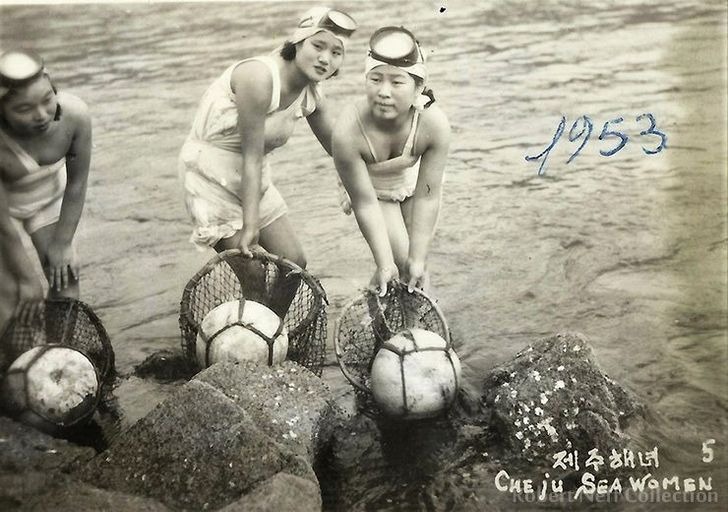
Off the southern coast of South Korea, Jeju Island sits, where a community of women has been diving into the North Pacific for around 2000 years. They’re called the haenyeo. Sea women. They free-dive without oxygen tanks to depths of five to seventeen meters. They average roughly sixty dives per hour. They work in sessions lasting more than 4 hours. In winter, the water temperature drops to 10°C (50°F), which is, to be precise, very cold.
The average age of an active haenyeo today is approximately 75. Some of them are still diving into their 80s.
Nobody told them to listen to their body.
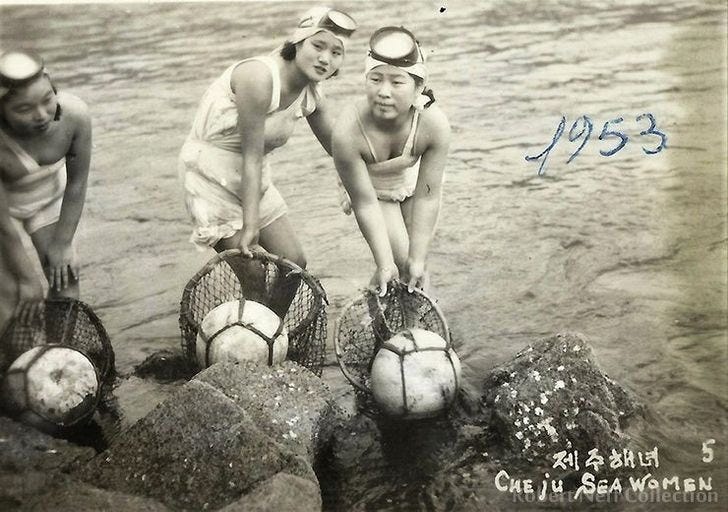
Before I go further, I’ll be honest: the haenyeo haven’t been studied through randomized controlled trials. The research base, while genuinely rich, is observational. I’m going to give you the science as it exists, not as we’d like it to be. (I’m also going to give you some opinions. You can tell the difference.)
What exists is remarkable.
A 2025 study in Current Biology found that haenyeo demonstrate the highest proportions of time underwater of any humans, exceeding even semi-aquatic mammals and comparable to some marine mammals. Think about that for a second. Not the most for women. The most of any humans. Period.
So, how exactly did that happen? And why women?
During cold-water immersion, women exhibit a greater insulative response through peripheral vasoconstriction and redistribution of subcutaneous fat, while men rely more on metabolic heat production and shivering. Read that again. Men fight the cold. Their bodies work harder to push back against the temperature. Women insulate. They conserve. They redistribute. These aren’t two ways of doing the same thing. They’re fundamentally different strategies, and in prolonged cold-water immersion, the female strategy is more efficient.
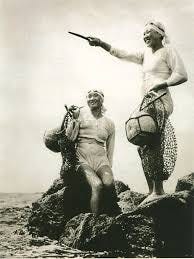
The haenyeo illustrate this beautifully. Even in the wetsuit era, older haenyeo around age 70 still demonstrate greater skin temperature drops during cold exposure, lower energy expenditure in the cold, and superior cold-induced vasodilation of the fingers compared to age-matched non-diving women. Their bodies learned to do more with less. They got better at conserving, not just enduring. That is not fragility dressed up as adaptation. That is actual adaptation.
Then there’s brown adipose tissue. The good fat. The fat that burns things. Cold-induced thermogenesis is significantly higher in women, and this is independently associated with estradiol levels. Women exhibit greater adaptive responses in brown adipose tissue temperature than men, regardless of menstrual cycle phase. Your estrogen is not making cold exposure harder. It’s activating the tissue that generates heat in response to cold, and it does so more robustly in women than in men.
The mitochondrial picture is the same story. Women demonstrate superior intrinsic mitochondrial respiration in skeletal muscle, comparable to endurance-trained men. Female mitochondria also exhibit higher antioxidant gene expression and lower oxidative damage. Effects that are estrogen-dependent. Your cells are better equipped to handle the oxidative stress induced by cold exposure. Not despite your hormones. Because of them.
And in 2025, a genomics study found the first genomic evidence that natural selection has shaped the haenyeo population over generations, including positively selected genetic variation associated with cold water tolerance and adaptive variants associated with reduced diastolic blood pressure, likely protecting against the cardiovascular strain of diving during pregnancy. These women didn’t just adapt within their lifetimes. Their community adapted over centuries, shaped by doing something hard in cold water repeatedly for a very long time.
The wellness content cycle-trackers would like you to believe that cold water is something women need to approach carefully, like a fragile negotiation. The haenyeo’s genome would like to suggest otherwise.
Here’s the part I love most.
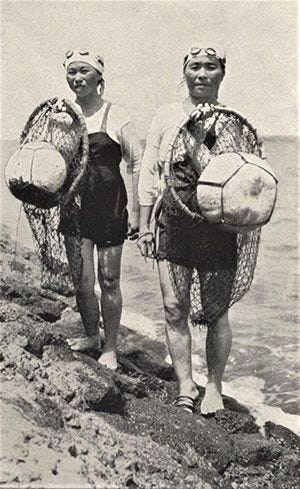
The haenyeo tradition didn’t emerge because women were assigned to dive while men were off doing something more important. It emerged from a matrilineal economic structure where women were the primary breadwinners. They held the economic power. They dove because diving was the work, and the work was theirs. Their community, their financial independence, their identity as women, all of it was organized around their capacity to do something that most people today would describe as extreme.
UNESCO recognized the haenyeo as Intangible Cultural Heritage in 2016. Not as a curiosity. Not as a cautionary tale about women overexerting themselves. As a living tradition worth preserving.
I keep thinking about what it means to grow up inside that culture. To be a girl who watches the women around her dive into 50-degree water for hours and return with food. To understand, from the very beginning, that your body is built for exactly this kind of challenge. To never once be handed an article that says maybe take it easier in the luteal phase.
We don’t have a randomized controlled trial for the psychological effect of never being told you’re fragile. But the physiology of the haenyeo and 2000 years of unbroken practice suggest the answer isn’t nothing.
I’m not writing this to sell you a cold plunge tub. I’m not prescribing anything. Personally, I love cold plunging in the warmer months but tend to shy away from it in the winter. Because, yeah, I “listen to my body.” (Which is a very clinical way of saying I don’t enjoy freezing my ass off in a tub of ice water in the middle of a blustery Utah snowstorm.) The cold shock response is real, the cardiovascular demands are real, and if you have conditions affecting your circulation or heart rhythm, have an actual conversation with a clinician before getting into a tub of ice water. (This is not that conversation. I’m a doctor writing a Substack, not your doctor.)
And yes, most cold therapy research has been conducted on men. We’re working with incomplete maps.
But incomplete maps are not the same thing as “proceed with caution.”
The haenyeo didn’t get the modified protocol. They got the actual ocean, in winter, at 10°C, for four hours, without a wetsuit. And what their biology shows us, and what a 2025 genomics study confirmed, is that their bodies didn’t just tolerate that. Their bodies optimized for it. Across generations.
Ripley and Nixon leave in August. Seven hours by plane is a long way. I’ve been trying to figure out what I want them to carry with them, besides the overpriced dorm bedding and the inexplicable number of hoodies that accumulate in teenage girls’ closets. What do you give two people who are each other’s best thing when they’re about to go somewhere new, and the world is going to start telling them, in ways large and small, to be careful?
I think it’s this. They will tell you to modify. To adjust, go shorter, warmer, and easier. Some of that advice will come from people who love you. Some of it will come from systems that were never designed with you in mind. Most of it will arrive dressed as wisdom.
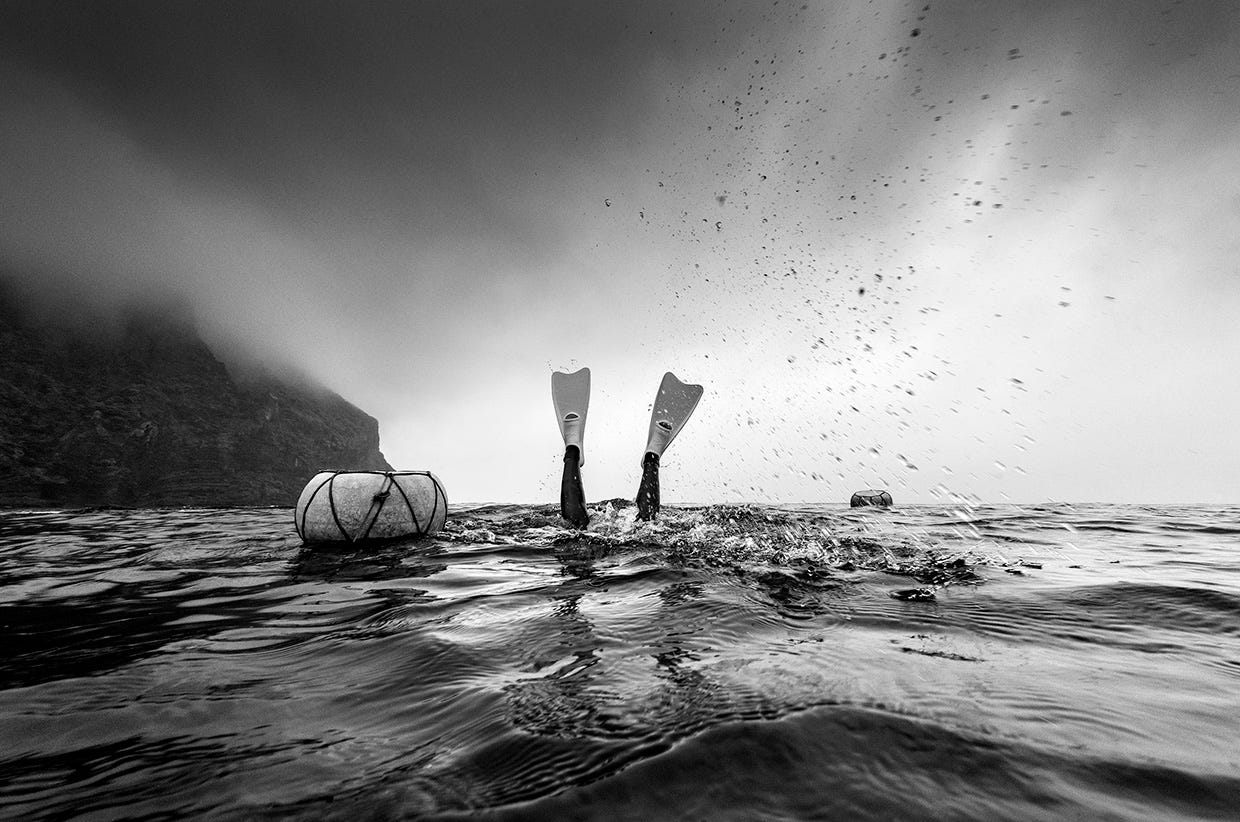
But the next time someone tells you that women need to proceed more carefully than men, I want you to picture a 78-year-old woman on Jeju Island, wearing little more than a white cotton shirt and shorts, lacing up her fins. She is already sixty dives deep. She is not modifying.
That’s what I want Nipples to know. Before they go.
References
Aguilar-Gómez D, Bejder J, Graae J, et al. Genetic and Training Adaptations in the Haenyeo Divers of Jeju, Korea. Cell Reports. 2025. PMID: 40318638
Aisenpreis PM, Aisenpreis S, Feisst M, Schleip R. Whole-Body Cryotherapy at −90°C for 9 Weeks: Effects on Immune Function, Stress, and Immune-Related and Vascular Blood Parameters in Healthy Adults. Journal of Clinical Medicine. 2026. PMID: 41682647
Avis NE, Levine BJ, Coeytaux R. Results of a Pilot Study of a Cooling Mattress Pad to Reduce Vasomotor Symptoms and Improve Sleep. Menopause. 2022. PMID: 35881974
Borrás C, Sastre J, García-Sala D, et al. Mitochondria From Females Exhibit Higher Antioxidant Gene Expression and Lower Oxidative Damage Than Males. Free Radical Biology & Medicine. 2003. PMID: 12614843
Cain T, Brinsley J, Bennett H, et al. Effects of Cold-Water Immersion on Health and Wellbeing: A Systematic Review and Meta-Analysis. PLoS One. 2024. PMID: 39879231
Cardinale DA, Larsen FJ, Schiffer TA, et al. Superior Intrinsic Mitochondrial Respiration in Women Than in Men. Frontiers in Physiology. 2018. PMID: 30174617
Castellani JW, Eglin CM, Ikäheimo TM, et al. ACSM Expert Consensus Statement: Injury Prevention and Exercise Performance During Cold-Weather Exercise. Current Sports Medicine Reports. 2021.
Castellani JW, Young AJ, Ducharme MB, et al. American College of Sports Medicine Position Stand: Prevention of Cold Injuries During Exercise. Medicine and Science in Sports and Exercise. 2006.
Dzidek A, Czerwińska-Ledwig O, Zuziak R, et al. The Effect of Whole-Body Cryostimulation Treatments on the Profile of Selected Adipokines and Sirtuins in Middle-Aged Individuals With Varying Degrees of Body Fatness. Cryobiology. 2026. PMID: 41759494
Fuller-Jackson JP, Dordevic AL, Clarke IJ, Henry BA. Effect of Sex and Sex Steroids on Brown Adipose Tissue Heat Production in Humans. European Journal of Endocrinology. 2020. PMID: 32508310
Graham TE. Thermal, Metabolic, and Cardiovascular Changes in Men and Women During Cold Stress. Medicine and Science in Sports and Exercise. 1988. PMID: 3057320
Herz CT, Kulterer OC, Prager M, et al. Sex Differences in Brown Adipose Tissue Activity and Cold-Induced Thermogenesis. Molecular and Cellular Endocrinology. 2021. PMID: 34126190
Hohenauer E, Douzi W, Burtscher J. Potential Health Benefits of Cold-Water Immersion: The Central Role of PGC-1α. The Journal of Physiology. 2025. PMID: 41160573
Hong SK, Rahn H, Kang DH, Song SH, Kang BS. Diving Pattern, Lung Volumes, and Alveolar Gas of the Korean Diving Woman (Ama). Journal of Applied Physiology. 1963. PMID: 31083859
Junker A, Wang J, Gouspillou G, et al. Human Studies of Mitochondrial Biology Demonstrate an Overall Lack of Binary Sex Differences: A Multivariate Meta-Analysis. FASEB Journal. 2022. PMID: 35073429
Kang BS, Song SH, Suh CS, Hong SK. Changes in Body Temperature and Basal Metabolic Rate of the Ama. Journal of Applied Physiology. 1963. PMID: 31090384
Kennard A, Saunders KT. Integrative Approaches to Perimenopause. The American Journal of Medicine. 2026. PMID: 41520809
Kim JI, Kim M. Health Care Experiences of Korean Women Divers (Jeju Haenyeos). Qualitative Health Research. 2018. PMID: 29415636
Kong Y, Hossain MB, McNaboe R, et al. Sex Differences in Autonomic Functions and Cognitive Performance During Cold-Air Exposure and Cold-Water Partial Immersion. Frontiers in Physiology. 2024. PMID: 39479308
Kunutsor SK, Lehoczki A, Laukkanen JA. The Untapped Potential of Cold Water Therapy as Part of a Lifestyle Intervention for Promoting Healthy Aging. GeroScience. 2025. PMID: 39078461
Lee I, Lee YJ, Jang EC, et al. The Acclimatization of Haenyeo to a Cold Environment and Occupational Characteristics Evaluated by Orexin and Irisin Levels. Annals of Occupational and Environmental Medicine. 2022. PMID: 36452252
Lee JY, Lee HH, Kim S, et al. Diving Bradycardia of Elderly Korean Women Divers, Haenyeo, in Cold Seawater: A Field Report. Industrial Health. 2015. PMID: 26632118
Lee JY, Park J, Kim S. Cold Adaptation, Aging, and Korean Women Divers Haenyeo. Journal of Physiological Anthropology. 2017. PMID: 28789677
Lee JY, Park J, Koh E, Cha S. Finger Cold-Induced Vasodilation of Older Korean Female Divers, Haenyeo: Effects of Chronic Cold Exposure and Aging. International Journal of Biometeorology. 2017. PMID: 28160059
McKnight JC, Solms B, Jensen M, et al. Diving Behaviour and Physiology of the Korean Haenyeo. Current Biology. 2025. PMID: 40829560
Mengel LA, Seidl H, Brandl B, et al. Gender Differences in the Response to Short-Term Cold Exposure in Young Adults. The Journal of Clinical Endocrinology and Metabolism. 2020. PMID: 32144431
Oh YJ, Jung JY, Kim SS, et al. The Association of Kidney Function With Repetitive Breath-Hold Diving Activities of Female Divers From Korea, Haenyeo. BMC Nephrology. 2017. PMID: 28228118
Park J, Kim S, Kim DH, Cha S, Lee JY. Whole-Body Cold Tolerance in Older Korean Female Divers “Haenyeo” During Cold Air Exposure: Effects of Repetitive Cold Exposure and Aging. International Journal of Biometeorology. 2018. PMID: 29098422
Park JH, Kim KW. Research on Haenyeo: Insights Into Human Adaptations to Extreme Environments. Psychiatry Investigation. 2025. PMID: 40633579
Pinkerton JV. Hormone Therapy for Postmenopausal Women. New England Journal of Medicine. 2020.
Pound M, Massey H, Roseneil S, et al. How Do Women Feel Cold Water Swimming Affects Their Menstrual and Perimenopausal Symptoms? Post Reproductive Health. 2024. PMID: 38271095
Solianik R, Skurvydas A, Vitkauskienė A, Brazaitis M. Gender-Specific Cold Responses Induce a Similar Body-Cooling Rate but Different Neuroendocrine and Immune Responses. Cryobiology. 2014. PMID: 24809633
Straat ME, Martinez-Tellez B, Sardjoe Mishre A, et al. Cold-Induced Thermogenesis Shows a Diurnal Variation That Unfolds Differently in Males and Females. The Journal of Clinical Endocrinology and Metabolism. 2022. PMID: 35176767
Takeuchi A, Tsujimoto K, Aoki J, et al. Sex Difference in BAT Thermogenesis Depends on PGC-1α-Mediated Phospholipid Synthesis in Mice. Nature Communications. 2025. PMID: 40659621
Ventura-Clapier R, Moulin M, Piquereau J, et al. Mitochondria: A Central Target for Sex Differences in Pathologies. Clinical Science. 2017. PMID: 28424375
Wiecek M, Kusmierczyk J, Szymura J, Kreiner G, Szygula Z. Whole-Body Cryotherapy Alters Circulating MicroRNA Profile in Postmenopausal Women. Journal of Clinical Medicine. 2023. PMID: 37629307
Wiecek M, Szymura J, Kusmierczyk J, Lipowska M, Szygula Z. Whole-Body Cryotherapy Improves Asprosin Secretion and Insulin Sensitivity in Postmenopausal Women. Biomolecules. 2023. PMID: 38002284
Wiecek M, Szymura J, Sproull J, Szygula Z. Decreased Blood Asprosin in Hyperglycemic Menopausal Women as a Result of Whole-Body Cryotherapy Regardless of Metabolic Syndrome. Journal of Clinical Medicine. 2019. PMID: 31510055
Wiecek M, Szymura J, Sproull J, Szygula Z. Whole-Body Cryotherapy Is an Effective Method of Reducing Abdominal Obesity in Menopausal Women With Metabolic Syndrome. Journal of Clinical Medicine. 2020. PMID: 32872598
Are you a medical provider? Learn to prescribe hormone optimization therapy with the frameworks, protocols, and confidence you didn’t get in training.
Get Dr. Amy Killen’s Newsletter
Hormones, longevity, and regenerative medicine — straight talk from a physician who actually prescribes it. Free, weekly-ish, no spam.
This article was originally published on Dr. Amy Killen’s Substack newsletter. Subscribe for free to get new posts delivered to your inbox.