Does having sex more frequently help delay the onset of menopause?
Possibly.
According to a study of almost 3,000 midlife women, those who had sex at least once a week were 28% less likely to transition into menopause at any given age than those having sex less than monthly.
Gulp.
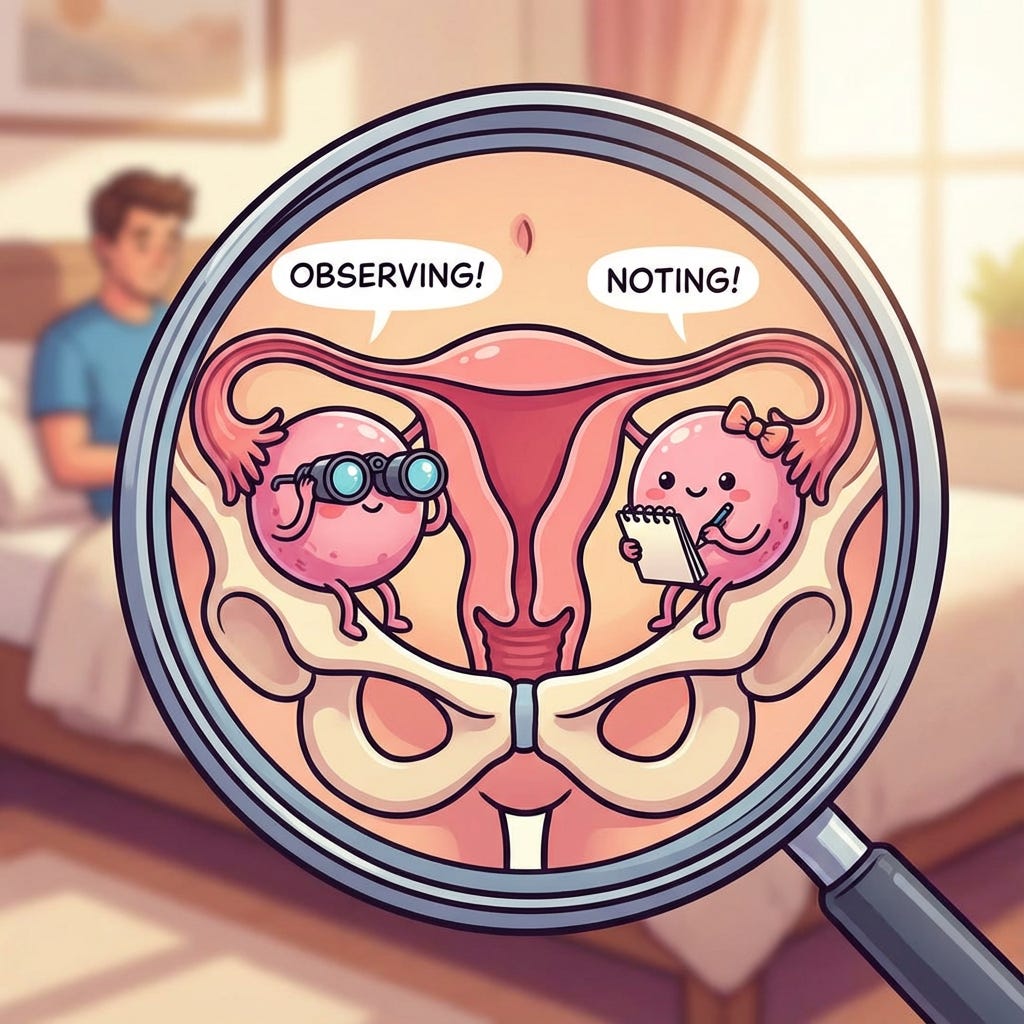
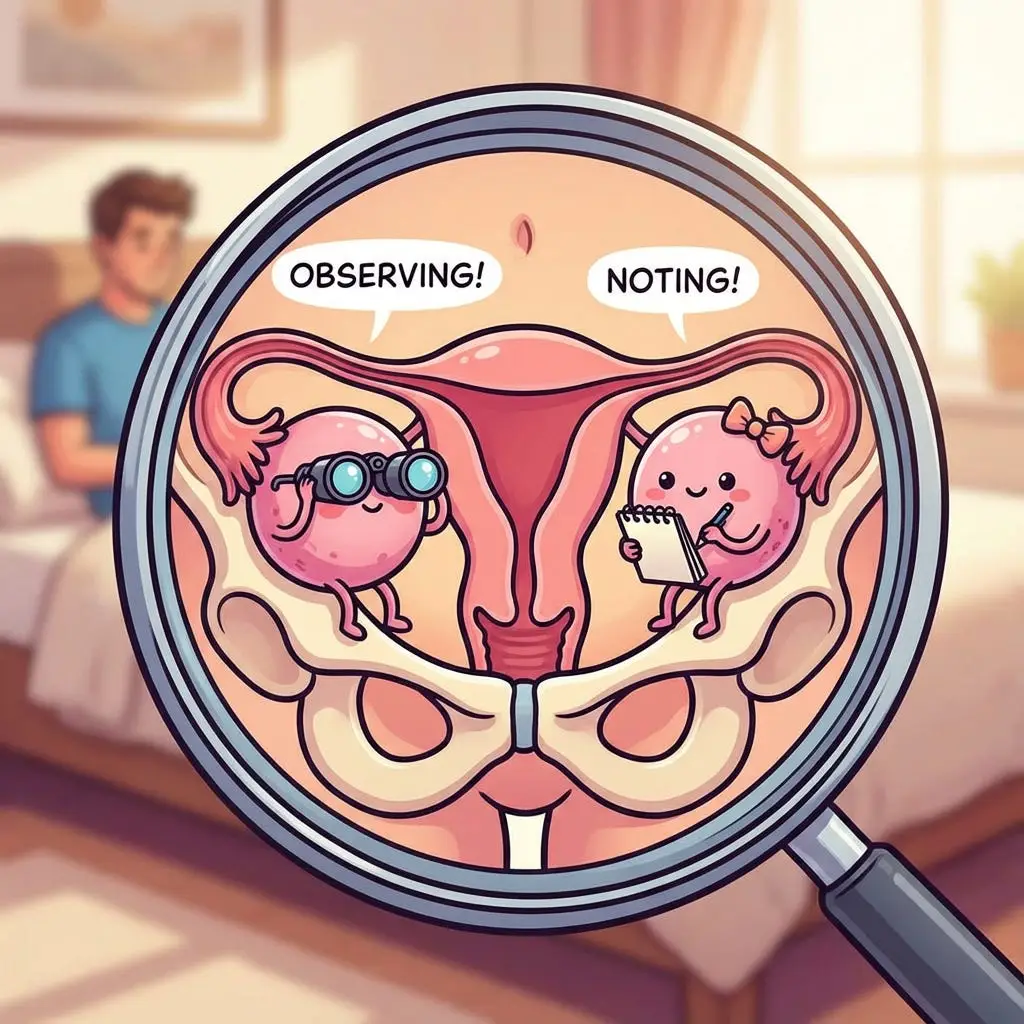
Does this mean that having sex will delay menopause? I’m not sure I’d go that far, but your ovaries may be paying closer attention to your life than you ever expected. Not in a creepy “Alexa in the corner” way, but in a surprisingly biological way. Because your ovaries? They’re not passive, dusty egg-holders. They’re active endpoints of a complex evolutionary negotiation.
They listen. They interpret. And yes, they have opinions.
Today we’re diving into what the data says about sexual activity, ovarian aging, and the weirdly fascinating evolutionary logic behind why your ovaries may care what’s happening in your bedroom (or shower, or wherever you prefer).
Let’s go.
The Study:
“Sexual frequency and age of natural menopause” by Arnot and Mace was published in Royal Society Open Science in 2020. This study followed 2,936 women in the SWAN cohort, an ongoing, multi-site, multi-ethnic study of premenopausal and perimenopausal women who were still having periods (ages 42 – 52). Researchers tracked sexual activity (defined broadly: intercourse, oral sex, caressing/touching, AND self-stimulation) and a glut of confounders like marital status, serum estradiol levels, BMI, overall health status, smoking, education, number of pregnancies, ethnicity, and age of first menstrual cycle. Women were followed for ten years.
The key finding: The authors’ first hypothesis was that increased sexual frequency lowers the risk of entering menopause. This was shown to be true. Women who had sex at least weekly had a 28% lower hazard of reaching menopause during the study period. Women having sex monthly had a 19% lower risk than those not having sex.
Translation: At any given age, more sexually active women were less likely to have crossed into menopause.
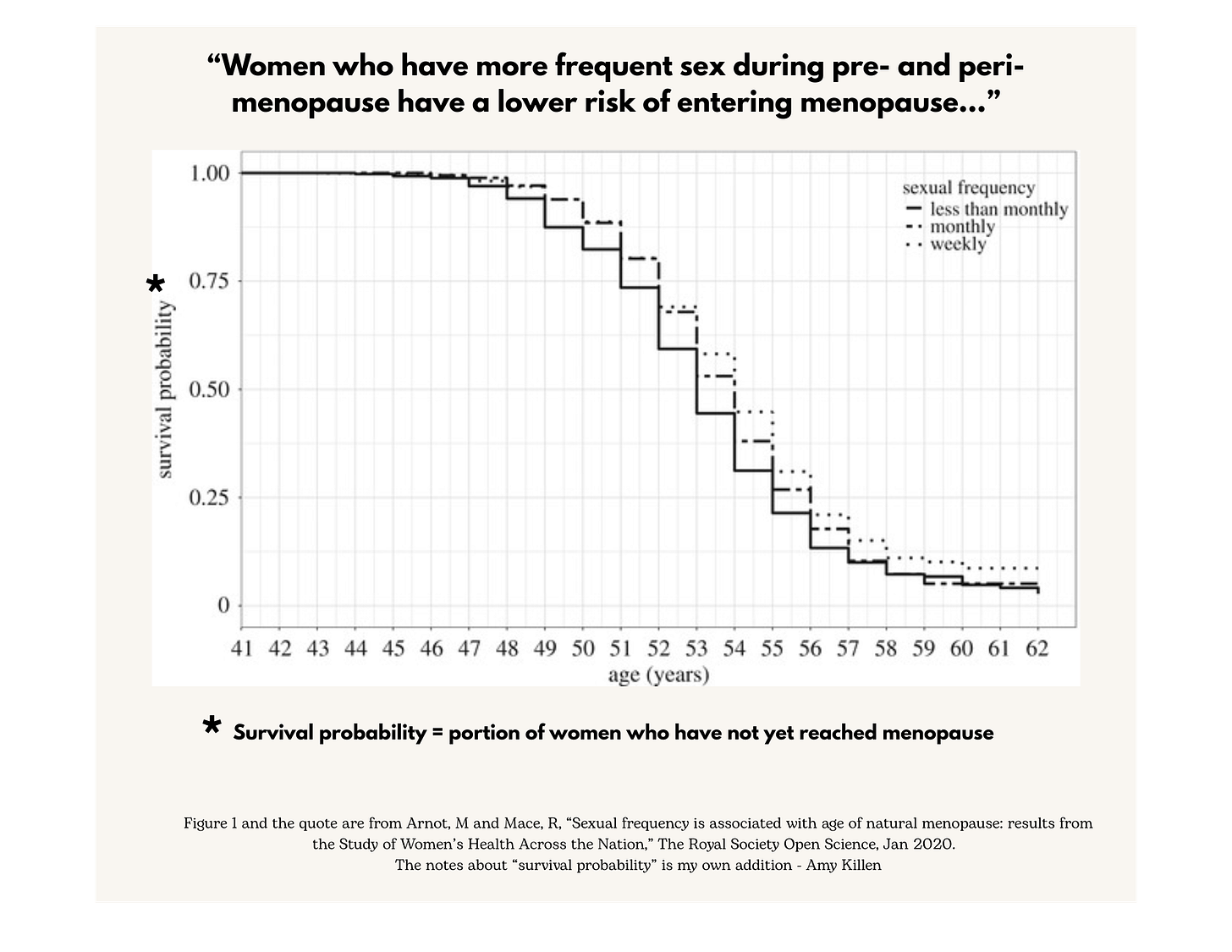
The study authors’ second hypothesis was that exposure to male pheromones delays the age of natural menopause, but this study did NOT support this. They found that simply having an adult male in the household had no effect on the age of menopause onset.
Important: The study did not show causation. It didn’t show that sex boosts hormones. It didn’t show that orgasms magically extend ovarian life. Although they controlled for many variables (including serum estradiol levels), they did not model or control for symptoms such as low libido, vasomotor symptoms, or low mood. This study may be showing a reverse causality instead of actual causality – maybe the women who were closer to menopause chose to have less sex because they were miserable.
However, the association was strong enough and biologically plausible enough that evolutionary biologists got very excited. And, frankly, I think it’s worth exploring. If the frequency of sex (or sex-like behaviors) does influence when you go into menopause, why would that be?
That’s where the Grandmother Hypothesis walks onto the stage, wearing a feather boa and holding a martini.
Why Would Sex Affect Menopause?
If you took Anthropology 101, you may remember that humans (and a few whales) are weird. Most mammals reproduce until they die. But human females stop decades early and live on, long past fertility. Why?
The leading explanation: Grandmothers matter. In the “old days,” post-reproductive women increased their grandchildren’s survival by providing food and resources, enabling their daughters to reproduce more safely, sharing knowledge and social support, and stabilizing multigenerational households. That’s the Grandmother Hypothesis, and it’s widely supported in the research.
But here’s the twist: Evolution doesn’t require menopause to happen at one fixed age. It only requires that menopause happen early enough to protect maternal survival and maximize kin support. So the timing of menopause may be flexible, an adaptive switch, not a predetermined expiration date. (Whether the “grandmother hypothesis” still applies to modern-day women or not is a question for another day)
Which leads to our next question: What kinds of signals might the body use to decide whether to keep ovulating or call it quits?
This is where sexual activity enters the plot.
Ovulation Is Expensive. If Pregnancy Looks Unlikely, Why Keep Paying the Bill?
Ovulation is not a gentle, delicate flower. It is, biologically speaking, a controlled inflammatory explosion. Each ovulation ruptures the ovarian surface, triggers a surge of cytokines, recruits immune cells, requires tissue repair, and consumes a surprising amount of metabolic and antioxidant resources. Your body does this every month for decades. It’s such an intense process that one of the leading theories for ovarian cancer, the “incessant ovulation hypothesis,” links repeated ovulatory trauma to malignant transformation.
Now, imagine you’re your ovaries. If there’s a reasonable chance of pregnancy, all this expensive work makes sense. But if sexual activity plummets, your body may interpret that as: “Reproduction is unlikely. It’s time to reallocate these resources to staying alive and supporting the family.”
This is precisely what the authors of the Arnot and Mace study hypothesized. Weekly sexual activity might signal fertility potential, keeping the reproductive machinery running a little longer. Low sexual activity? The body may quietly decide: Let’s stop ovulating and divert these resources elsewhere.
But Wait, Isn’t Sex Good for Your Hormones? Does Oxytocin Play a Role?
This is where the conversation gets even more fun.
We know: Sex (partnered or solo) increases oxytocin. Oxytocin dampens cortisol. High, chronic cortisol suppresses the HPG axis (the brain-ovary connection). Stress is associated with earlier menopause in several cohorts. We even have animal research showing that oxytocin administration can protect or improve ovarian follicles (eggs).
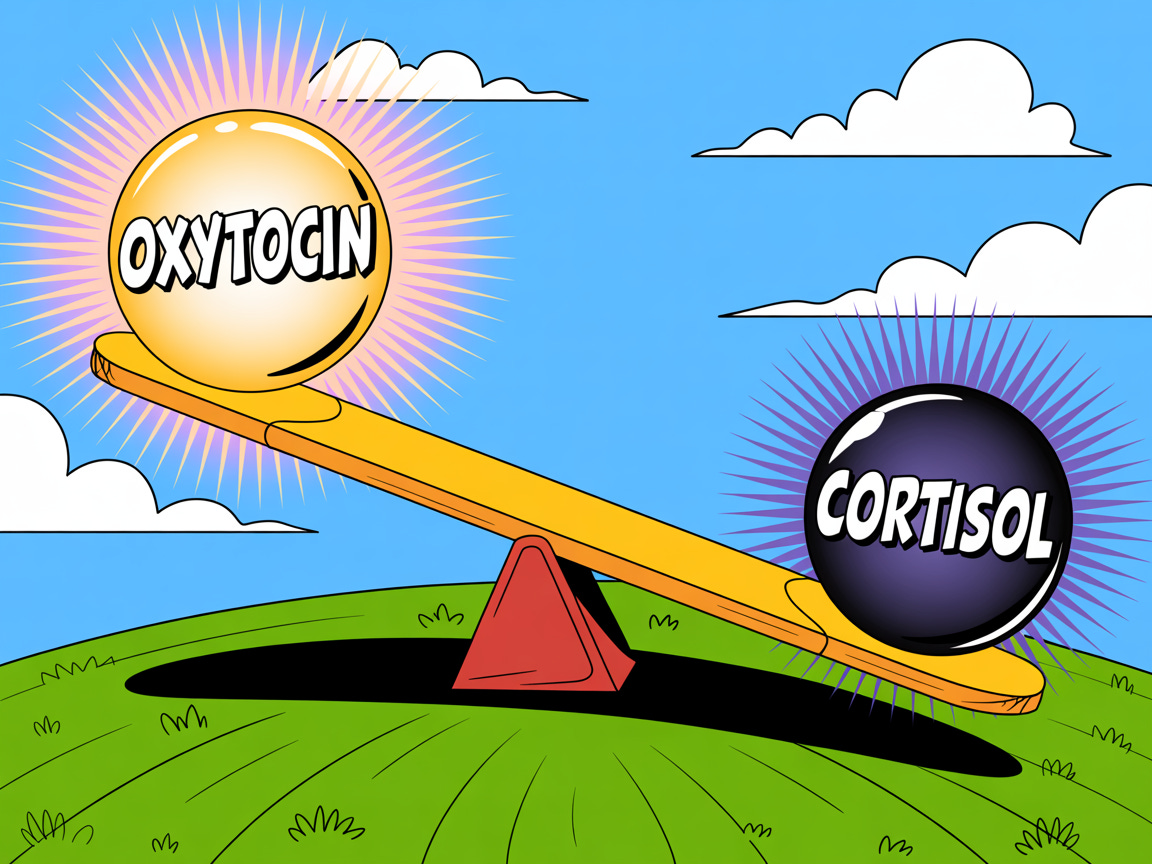
While we do not have evidence in humans that oxytocin or orgasm directly delays menopause, from an evolutionary and endocrine perspective, the pieces fit together in an eerily elegant way. It’s biologically plausible that greater intimacy leads to higher oxytocin levels and a lower stress burden, which, in turn, support healthier hypothalamic-pituitary-ovary signaling and slightly delays the depletion of ovarian follicles.
Your ovaries may not be “watching” your sex life, but perhaps they’re responding to the hormonal environment your sex life helps create.
Marriage, Cohabitation, and Age of Natural Menopause
Before the 2020 paper, a handful of epidemiologic studies noticed something: Married or cohabitating women tended to reach menopause later than single women. For years, scientists assumed this was about socioeconomic advantages, lower stress, better health behaviors, or simply the protective effects of partnership. No one asked the obvious question: What if part of the story was simply more sex?
When the Arnot and Mace study controlled for marital status, the association between sex and menopause timing persisted; however, they did NOT find that married women’s menopause was delayed compared to single women when sexual frequency was controlled.
Meaning: The signal wasn’t “marriage.” It was sexual activity itself.
So, Should You Have More Sex to Delay Menopause?
As much as I like to talk about the many benefits of sex, I can’t tell you that it will slow ovarian aging or delay menopause. But, here’s what I can say: Sex (partnered or solo) has real, measurable benefits. It lowers stress, boosts mood, improves sleep, enhances intimacy, strengthens pelvic floor health, and supports cardiovascular and metabolic well-being.
And if it turns out that your ovaries register this as a sign that the world is stable, safe, and full of possibility? Well, that’s just a bonus.
What I want you to take away is this: Ovarian aging is not a fixed countdown clock. It’s a dialogue. Your behaviors, stress levels, environment, and relationships are part of it. That’s hopeful. That’s empowering. And honestly? That’s pretty damn cool.
The Bottom Line:
Your ovaries are not passive bystanders in your life. They are exquisitely tuned sensors of your environment: your stress, your intimacy, your relationships, your health. They’re not judging you, but they’re definitely paying attention.
And if your sex life sends a signal that fertility is still on the table, they may just decide to keep the lights on a little longer.
Having loads of incredible sex may or may not affect when you go into menopause. But maybe your ovaries are there, in the corner, watching, with opinions. And honestly? I’m here for it.
What do you think? I’m curious! Share below!
References:
Key Study: Arnot M, Mace R. Sexual frequency is associated with age of natural menopause: results from the Study of Women’s Health Across the Nation (SWAN). R Soc Open Sci. 2020;7(1):191020. doi:10.1098/rsos.191020.
Marital status and sexual frequency
-
Stanford JL et al. Marital status and age at natural menopause. Am J Hum Biol. 2000;12(4):444‑453.
-
Arnot M, Mace R. Sexual frequency is associated with age of natural menopause: results from the Study of Women’s Health Across the Nation. R Soc Open Sci. 2020;7(1):191020.
Determinants of age at natural menopause
-
Gold EB et al. Factors related to age at natural menopause: longitudinal analyses from SWAN. Am J Epidemiol. 2013;178(1):70‑83.
-
Bromberger JT et al. Prospective study of the determinants of age at menopause. Am J Epidemiol. 1997;145(2):124‑133.
-
Branco da Fonseca F et al. A prospective study of factors affecting age at menopause. Maturitas. 1989;11(1):13‑22.
-
Farzaneh F et al. Age at natural menopause and its determinants in female population: Kharameh cohort study. PLoS One. 2024;19(4):e0300448.
-
Azizi F et al. Prevalence of early and late menopause and its determinants in Rafsanjan cohort study. Sci Rep. 2023;13:1449.
Ovarian aging biology and prediction
-
Broekmans FJ, Soules MR, Fauser BCJM. Ovarian aging: mechanisms and clinical consequences. Endocr Rev. 2009;30(5):465‑493.
-
Depmann M et al. Prediction of age at menopause from assessment of ovarian reserve may be improved by using body mass index and smoking status. PLoS One. 2013;8(3):e57005.
-
de Kat AC et al. Predicting the age at natural menopause in middle‑aged women. PLoS One. 2021;16(4):e0249962.
Grandmother hypothesis
-
Lahdenperä M et al. Fitness benefits of prolonged post‑reproductive lifespan in women. Nature. 2004;428(6979):178‑181.
-
Hawkes K et al. Grandmothering, menopause, and the evolution of human life histories. Proc Natl Acad Sci U S A. 1998;95(3):1336‑1339.
-
Nattrass S et al. Postreproductive killer whale grandmothers improve the survival of their grandoffspring. Proc Natl Acad Sci U S A. 2019;116(52):26669‑26673.
-
Shanley DP, Kirkwood TBL. Menopause and postgenerative longevity. Max Planck Institute for Demographic Research Working Paper WP‑2004‑003; 2004.
-
Kim PS, Coxworth JE, Hawkes K. Increased longevity evolves from grandmothering. Proc R Soc B. 2012;279(1749):4880‑4884.
-
Pavard S, Branger F, Faurie C. Grandmothering and cognitive resources are required for the emergence of menopause and extensive postreproductive life span. PLoS Comput Biol. 2017;13(7):e1005631.
-
Hawkes K, Smith KR. Evaluating grandmother effects.
-
Sear R, Mace R. Demographic analyses of kin effects on child survival, including grandmother impacts, in traditional and historical human populations.
Other studies
-
Duffy DM et al. Ovulation: parallels with inflammatory processes. Endocr Rev. 2019;40(2):369‑416.
-
Fathalla MF. Incessant ovulation and ovarian cancer – a hypothesis re‑visited. Facts Views Vis Obgyn. 2013;5(4):292‑297.
-
Shahat M et al. Ovulation and ovarian wound healing are impaired with advanced reproductive age. Aging (Albany NY). 2020;12(10):9240‑9260.
-
Wentzensen N et al. Lifetime ovulatory years and risk of epithelial ovarian cancer: a multinational pooled analysis. J Natl Cancer Inst. 2023;115(5):539‑551.
-
National Academies of Sciences, Engineering, and Medicine. Clinical Practice Guidelines We Can Trust. Washington, DC: National Academies Press; 2011.
-
Kotsopoulos J et al. Incessant ovulation: a review of its importance in predicting cancer risk. Front Oncol. 2023;13:1240309.
-
Erbaş O et al. Oxytocin improves follicular reserve in a cisplatin‑induced gonadotoxicity model in rats. Biomed Res Int. 2014;2014:703691.
This article was originally published on Dr. Amy Killen’s Substack newsletter. Subscribe for free to get new posts delivered to your inbox.
Are you a medical provider? Learn to prescribe hormone optimization therapy with the frameworks, protocols, and confidence you didn’t get in training.
Get Dr. Amy Killen’s Newsletter
Hormones, longevity, and regenerative medicine — straight talk from a physician who actually prescribes it. Free, weekly-ish, no spam.