Medically reviewed by Dr. Amy Killen, MD, a board-certified physician specializing in hormone optimization and longevity medicine.
Quick answer: Testosterone is a normal, necessary hormone for women, and when it runs low it can take your sex drive, energy, motivation, and muscle with it. Plenty of women get told no for the wrong reasons: the lab came back “normal,” testosterone supposedly only helps libido, or someone is worried about hair loss or a beard. In my practice most women start around 5 mg a day of a cream, and we adjust from there based on how she feels.
Myth 1: Testosterone is a man’s hormone
Women make testosterone in the ovaries and adrenal glands, and a healthy young woman actually has more testosterone in her blood than estrogen. There are testosterone receptors in your brain, muscles, bones, heart, breasts, and genitals. It helps you build and keep muscle, protects bone, and fuels drive and motivation.
Men just have a lot more of it. That doesn’t make it theirs.
Myth 2: Your level is normal, so testosterone isn’t the problem
This is the one I hear most. A woman has low desire, no energy, and can’t build muscle no matter how hard she trains. Her doctor checks her testosterone, sees a number inside the range on the report, and tells her she’s fine.
But that range includes women of every age, and testosterone drifts down from our mid-twenties on. “Normal” for a 55-year-old is a low number. It’s like grading your eyesight against a room that includes everyone’s great-grandmother.
Testosterone levels in blood also match up poorly with how women actually feel. So I treat the woman, not the lab. If you have the symptoms, it’s worth a real conversation.
Myth 3: Testosterone only helps your sex drive
Low sexual desire after menopause is where the research is strongest, and that’s where the “it’s just a libido drug” idea comes from. Those studies used very small doses. They improved desire without moving blood levels much.
At a full (still female) dose, many women notice a lot more. More energy. More motivation. Better mood. Workouts that finally show up as muscle. When women tell me they feel like themselves again, testosterone is often part of the reason.
Myth 4: You don’t need to think about it until menopause
Estrogen and progesterone drop sharply at menopause. Testosterone doesn’t. It declines slowly over decades, so some women feel the effects in their thirties or forties, some later, and some never.
A few things can lower the testosterone your body can actually use, even when your total level looks fine. Birth control pills and oral estrogen both raise a protein that grabs onto testosterone and keeps it from working. If you’re on either and your drive has disappeared, mention it.
Myth 5: Testosterone will make you lose your hair or grow a beard
At the doses I use for women, most women have no side effects at all. The ones that do show up are usually mild and go away when the dose comes down: acne, oilier skin, or a few extra hairs on the chin or body.
Scalp hair loss is the fear I hear about most, and it’s less common than people think. A large analysis of 36 randomized trials found no scalp hair loss reported in any of them. More than half of women lose some hair around menopause anyway, and low estrogen is a much bigger culprit than testosterone. If shedding does happen, we pause, let it settle, and restart lower or switch how you take it.
The side effects I take seriously are a deeper voice and clitoral enlargement, because those can be permanent. They happen at high levels, well above a woman’s dose. It’s why I generally like to keep total testosterone under about 150 for most women. That’s several times higher than the lab’s reference range, and still far below a man’s.
And breast cancer? The old worry came from a synthetic pill that combined testosterone and estrogen and went through the liver. Testosterone through the skin is a different drug, and newer research on breast safety is encouraging. I don’t give hormones to anyone with an active hormone-sensitive cancer, and if you’ve had breast cancer, this is a decision to make with your oncologist.
Myth 6: Testosterone can do estrogen’s job
It can’t. Testosterone won’t fix hot flashes, night sweats, broken sleep, or vaginal dryness caused by low estrogen. In women, very little testosterone turns into estrogen, and it can even lower the small amount of estrogen your ovaries still make after menopause. If you’re in menopause, I give estradiol along with it. If you start testosterone and still feel lousy, the answer is often estrogen or progesterone, not more testosterone.
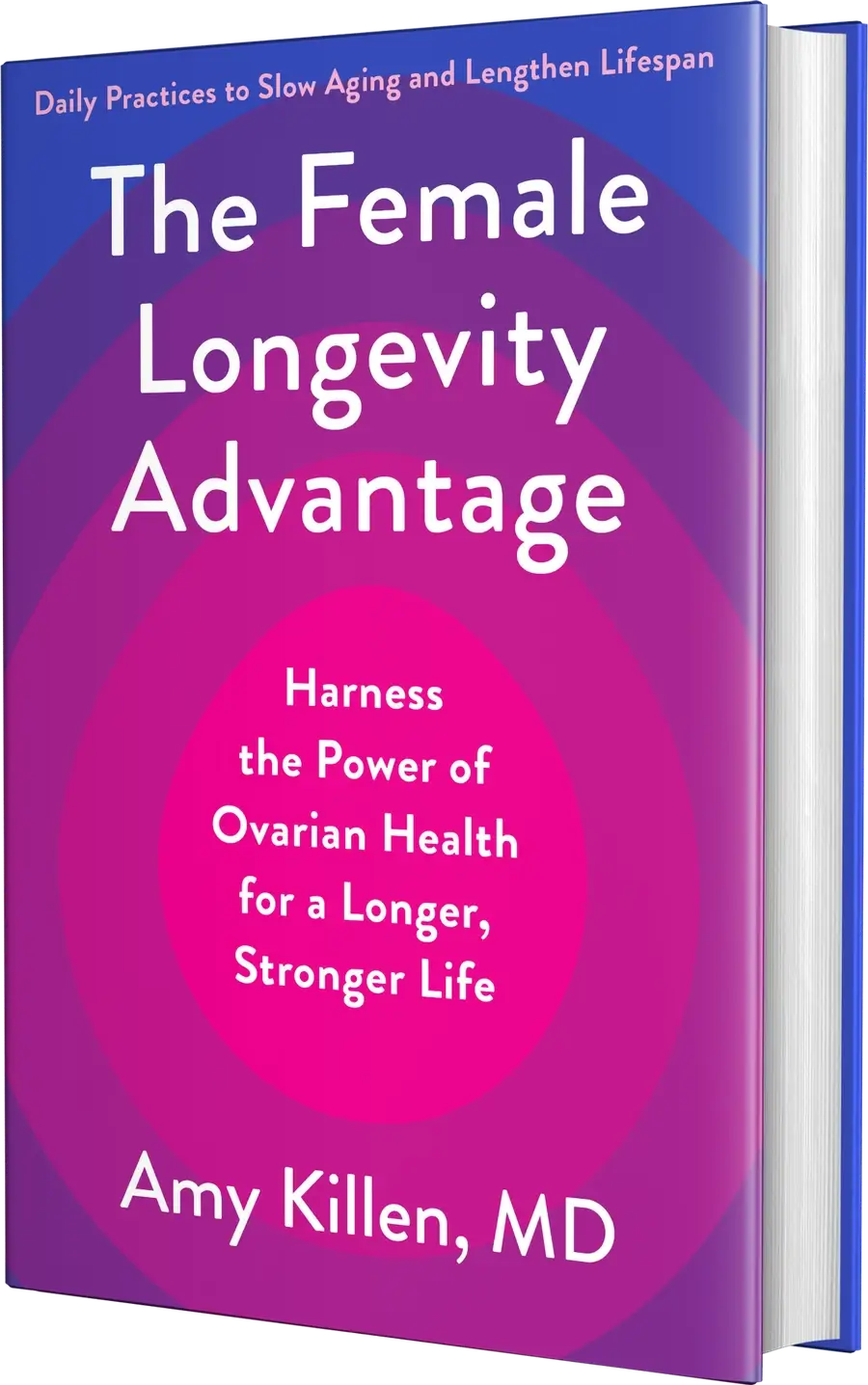
My new book · On sale February 23, 2027
The Female Longevity Advantage
Women outlive men by almost five years. Almost nobody asks why. My book is the playbook for how female bodies actually age, and how to keep the advantage you were born with. Pre-order in any format and get three free bonuses.
How women take testosterone
There’s no FDA-approved testosterone product for women in the United States (men have dozens), so doctors prescribe it off-label, usually as a compounded cream. Off-label sounds sketchy. It isn’t. Doctors use medications off-label every day.
Most of my patients use a cream once a day on thin skin like the inner thigh or inner arm, starting around 5 mg a day. Wash your hands afterward so it doesn’t rub off on your partner, kids, or pets. Other options include a vaginal cream, a dissolving tablet under the tongue, small weekly injections, and pellets placed under the skin. Pellets are convenient, but once one is in, it can’t come out, so if the dose is too high you live with it for months. I like to start with something you can stop tomorrow.
Give it time. Libido and energy usually improve within 4 to 8 weeks. Muscle and body composition take 3 to 6 months.
Who should skip testosterone
- Women who are pregnant, trying to get pregnant, or breastfeeding. Testosterone can harm a developing baby, so if pregnancy is possible you need reliable birth control.
- Women with an active hormone-sensitive cancer.
- Women who already make too much, including many women with polyendocrine metabolic ovarian syndrome (PMOS, formerly PCOS). Adding more makes acne and unwanted hair worse.
Frequently asked questions
How do I know if I have low testosterone?
Symptoms tell you more than a blood test. The common ones are low sex drive, fatigue, low motivation, trouble building muscle, and a flat mood. A lab result can support the picture, but a “normal” number doesn’t rule it out.
Is testosterone safe for women?
At a woman’s dose, with a doctor following you, the research is reassuring. Most side effects are mild and go away when the dose is lowered.
Will testosterone make me look masculine?
Not at the doses used for women. The permanent changes, like a deeper voice, happen only at high levels, which is why your doctor keeps your dose in a woman’s range.
How much testosterone does a woman take?
In my practice, most women start around 5 mg a day of cream, roughly a tenth of a typical man’s dose. From there we adjust based on how you feel.
Testosterone is one piece of a much bigger story about how women age. I tell the whole thing in my new book, The Female Longevity Advantage, out February 23, 2027. Pre-order the book and get three free bonuses.
And if you want more like this every week, straight from my clinical practice, sign up for my free Substack.
References
- Davis SR, Baber R, Panay N, et al. Global Consensus Position Statement on the Use of Testosterone Therapy for Women. J Clin Endocrinol Metab. 2019;104(10):4660-4666.
- Islam RM, Bell RJ, Green S, Page MJ, Davis SR. Safety and efficacy of testosterone for women: a systematic review and meta-analysis of randomised controlled trial data. Lancet Diabetes Endocrinol. 2019;7(10):754-766.
- Davison SL, Bell R, Donath S, Montalto JG, Davis SR. Androgen levels in adult females: changes with age, menopause, and oophorectomy. J Clin Endocrinol Metab. 2005;90(7):3847-3853.
- Davis SR, Davison SL, Donath S, Bell RJ. Circulating androgen levels and self-reported sexual function in women. JAMA. 2005;294(1):91-96.
- Glaser RL, Dimitrakakis C. Reduced breast cancer incidence in women treated with subcutaneous testosterone, or testosterone with anastrozole: a prospective, observational study. Maturitas. 2013;76(4):342-349.
This article is for educational purposes only and is not a substitute for individualized medical advice from your own physician.