Last weekend at the A4M Women’s Health Summit, my friend Dr. Jolene Brighten gave a talk on how perimenopause can make a brain look and feel a whole lot like ADHD. I spent most of it nodding like I’d been personally called out.
Walking into a room and forgetting why. Fourteen browser tabs, nine of them for the same thing. A to-do list you wrote, lost, rewrote, and found in the freezer.
Jolene is a naturopathic endocrinologist, an ADHD woman in perimenopause herself, and the author of a brand-new book, ADHD and Women: A Guide to Optimizing Your Hormones and Thriving with ADHD. Her argument: perimenopause can produce ADHD-like symptoms in women who never had ADHD, and it can unmask ADHD in women who had it all along and never knew.
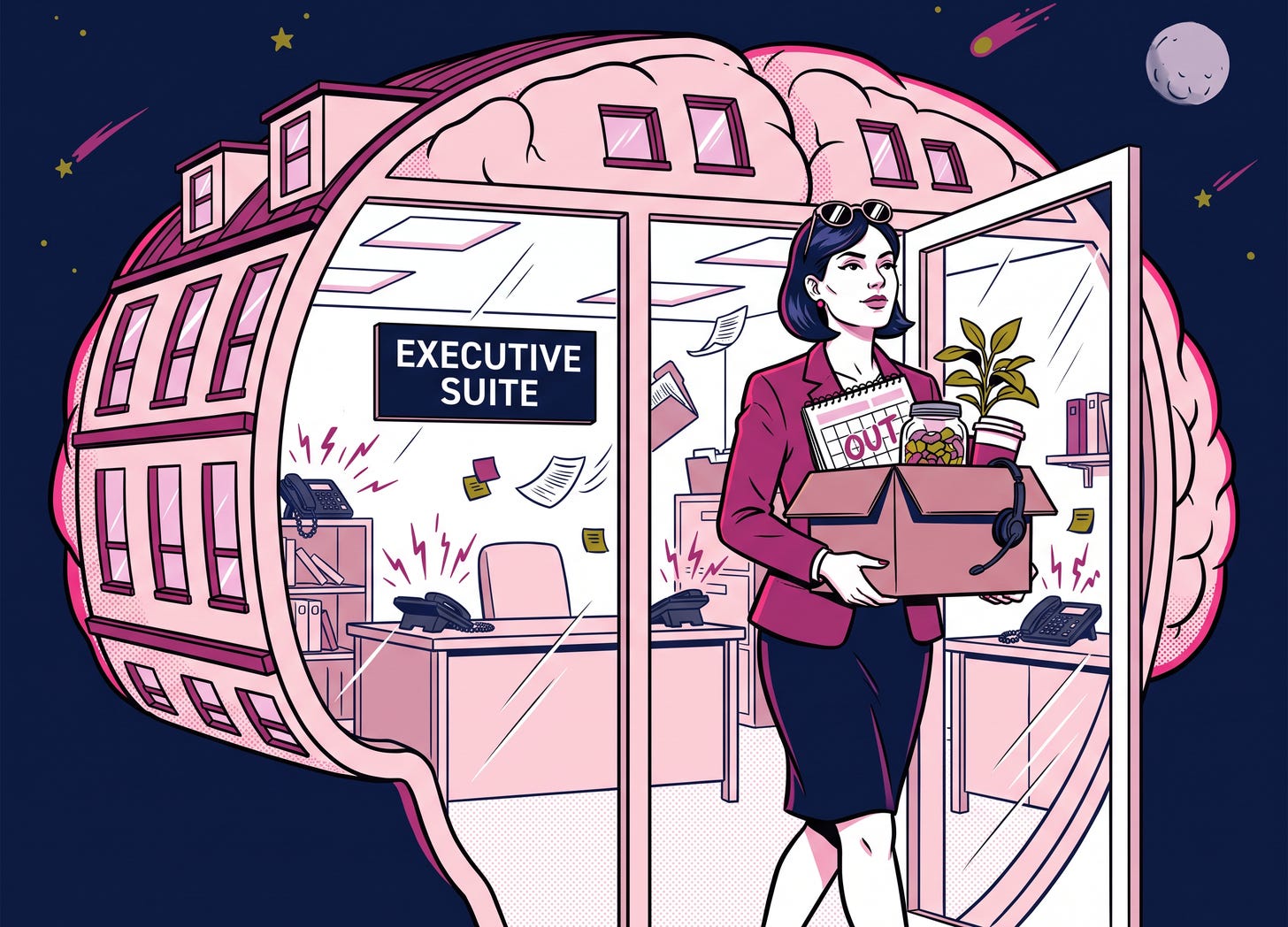
Either way, you’re not losing your mind. You’re losing your assistant.
Meet your executive assistant
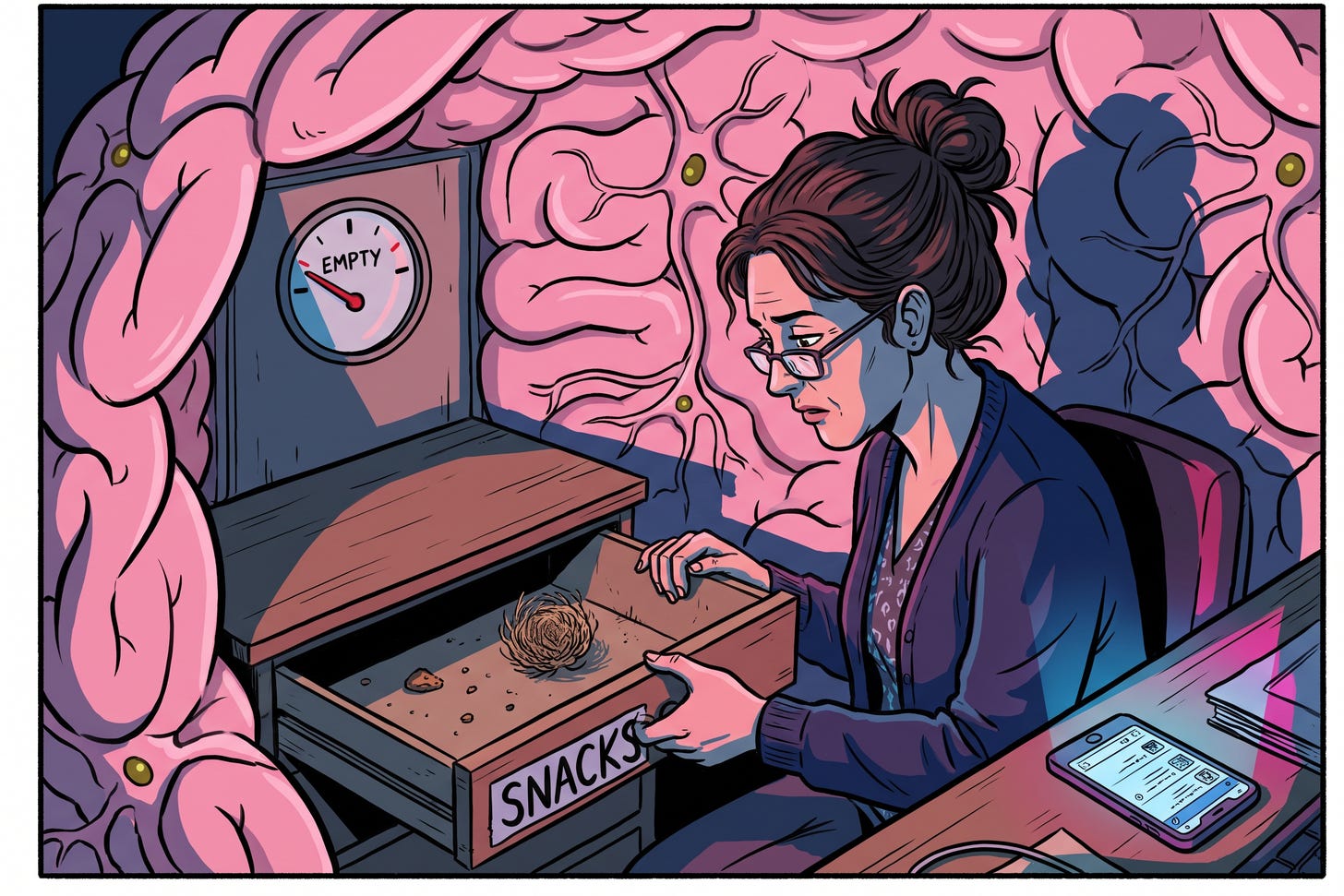
Executive function is the brain’s management suite: working memory, focus, planning, emotional regulation, the ability to start the boring thing. For roughly forty years, estrogen has been running that office for you. She kept the calendar. She handed you names at parties. She stocked the snack drawer. She screened your calls so you didn’t scream at the guy who tailgated you.
Then perimenopause shows up, and the assistant starts calling in sick. Randomly. Some days she’s back and better than ever (estrogen can spike higher in perimenopause than it typically did in your twenties), and some days her desk is empty and the phones are ringing.
Your brain notices. Mostly in five places.
1. The sentence that walks out mid-thought
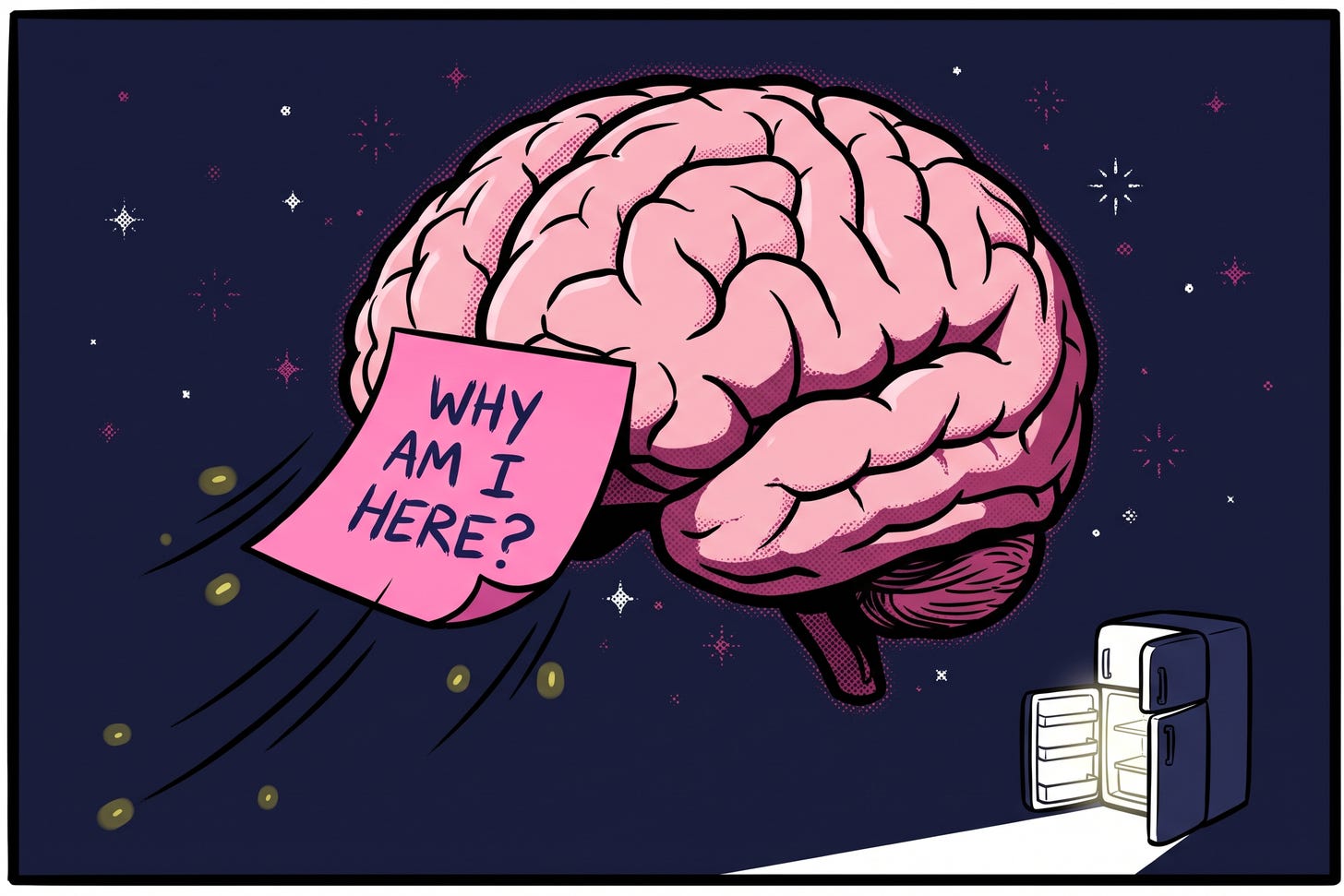
Working memory is the sticky note your brain holds while you finish a task. It runs on dopamine in the prefrontal cortex, and that system is finicky. Think hotel shower: a quarter turn either way and you’re freezing or scalded.
Estrogen boosts dopamine release and dials down COMT, the cleaning crew that sweeps dopamine out of the prefrontal cortex. (Estrogen basically sends the crew on a long lunch.) In a Berkeley study, young women tested at low- and high-estrogen points in their cycles showed shifts in working memory, and women who ran low on dopamine got sharper when estrogen was high.
Now yank estrogen out, shove it back in, yank it out again. Dopamine signaling is exactly what most ADHD medications target. Perimenopause is spinning the same knob.
So you open the fridge and stand there. Your sticky note fell off.
2. The fog
SWAN followed thousands of American women through the transition and tested them year after year. Premenopausal and postmenopausal women got better with practice, the way anyone gets faster at the Sunday crossword. Women in perimenopause didn’t. Processing speed and verbal memory stalled.
The good news nobody tells you: learning bounced back after menopause. The fog was real, measurable, and for most women, temporary.
That fog was you, doing your job and hers.
3. The short fuse
Emotional regulation is an executive function. Same management suite, same assistant.
So when perimenopause hits, the rage at the dishwasher arrives on schedule. So do the tears at a dog food commercial and the mildly critical email that becomes a three-day emotional event. Jolene ties this to rejection sensitivity, a hallmark of ADHD in women. At our clinics, we hear the same sentence constantly: “I don’t recognize my reactions.”
Your assistant used to read that email first, delete the snippy part, and hand you a latte. Now it lands raw.
4. Running on fumes
The brain burns glucose like a teenager burns through your data plan, and estrogen helps neurons use that glucose for energy. Dr. Lisa Mosconi’s PET imaging showed women in perimenopause and postmenopause had lower glucose metabolism in several brain regions than premenopausal women, even after accounting for age.
Remember the snack drawer? She took the snacks with her.
An underfueled brain behaves like a distracted one. It tires fast, drifts, and grabs the quickest hit of reward it can find (looking at you, Instagram at 10 p.m.).
5. The 3 a.m. board meeting
Somewhere between 39 and 47 percent of perimenopausal women report sleep problems. Night sweats. The 3 a.m. wake-up. The mind that boots up and starts reviewing every decision you’ve made since 1997.
Broken sleep, all by itself, produces inattention, forgetfulness, impulsivity, and irritability. A pretty convincing ADHD costume.
Your assistant used to cancel these meetings. Now you’re chairing them, in the dark, with a damp pillowcase.
Impostor or unmasking?
This is where Jolene’s book earns its spot on your nightstand.
For many women, these symptoms fade after menopause, once hormones settle into a lower, steadier normal. But plenty of women had ADHD all along. The overachievers. The people-pleasers. The color-coded planners holding a life together through sheer force of will. Jolene’s point is that masking costs energy, and perimenopause drains the account.
The data backs her up. In a large Icelandic cohort, women with ADHD reported severe perimenopausal symptoms far more often than women without it (54 percent versus 30 percent), and their symptoms peaked about a decade earlier, at ages 35 to 39. In an ADDitude reader survey of more than 3,000 women with ADHD, about six in ten said ADHD hit hardest between 40 and 59.
If you’ve always worked twice as hard as everyone else to look half as organized, perimenopause might not be creating the problem. It might be revealing it. For thirty years your assistant was quietly covering for you. Now she’s gone, and the audit has started.

What to do on Monday
-
Track it. Jot down focus, mood, and sleep next to your cycle, even if your cycle is now a choose-your-own-adventure novel. You may see ADHD symptoms flare in the days before a period, and that pattern is worth bringing to your clinician.
-
Talk hormones with someone who knows them. You know I had to say it.
-
Body-identical estradiol and progesterone can’t rehire the whole office, but steadier hormones mean a steadier signal.
-
If the pattern goes back to childhood, get an ADHD evaluation. A diagnosis in your forties is a user manual, decades late and still useful. Already on ADHD meds? Tell your prescriber about perimenopause.
-
Protect sleep like it’s your job. Treat the night sweats. Skip the late glass of wine (I’ve learned this one the hard way).
-
And eat tacos. This one is all Jolene: she calls tacos the best brain food, and (as a Tex-Mex aficionado) I am not going to argue. If you’ve been waiting for a doctor to sign off on Taco Tuesday, here I am. Signing.
If this is you, I see you. The office has been short-staffed for a while, and you’ve been running it alone.
Tell me in the comments: what’s your most perimenopausal “where are my keys” moment?
Amy
Disclosure: Jolene is a friend, and I’m promoting her book because I think it’s good. Nobody paid me. “ADHD and Women” is out now wherever books are sold (button below).
Sources
-
Brighten, Jolene. ADHD and Women: A Guide to Optimizing Your Hormones and Thriving with ADHD. New York: Rodale Books, 2026.
-
Prior, Jerilynn C. “Perimenopause: The Complex Endocrinology of the Menopausal Transition.” Endocrine Reviews 19, no. 4 (1998): 397–428. https://doi.org/10.1210/edrv.19.4.0341.
-
Xie, Tao, Shu-Leong Ho, and David Ramsden. “Characterization and Implications of Estrogenic Down-Regulation of Human Catechol-O-Methyltransferase Gene Transcription.” Molecular Pharmacology 56, no. 1 (1999): 31–38. https://doi.org/10.1124/mol.56.1.31.
-
Jacobs, Emily, and Mark D’Esposito. “Estrogen Shapes Dopamine-Dependent Cognitive Processes: Implications for Women’s Health.” Journal of Neuroscience 31, no. 14 (2011): 5286–5293. https://doi.org/10.1523/JNEUROSCI.6394-10.2011.
-
Greendale, Gail A., et al. “Effects of the Menopause Transition and Hormone Use on Cognitive Performance in Midlife Women.” Neurology 72, no. 21 (2009): 1850–1857. https://doi.org/10.1212/WNL.0b013e3181a71193.
-
Mosconi, Lisa, et al. “Perimenopause and Emergence of an Alzheimer’s Bioenergetic Phenotype in Brain and Periphery.” PLoS ONE 12, no. 10 (2017): e0185926. https://doi.org/10.1371/journal.pone.0185926.
-
Kravitz, Howard M., and Hadine Joffe. “Sleep During the Perimenopause: A SWAN Story.” Obstetrics and Gynecology Clinics of North America 38, no. 3 (2011): 567–586. https://doi.org/10.1016/j.ogc.2011.06.002.
-
Jakobsdóttir Smári, Unnur, et al. “Perimenopausal Symptoms in Women with and without ADHD: A Population-Based Cohort Study.” European Psychiatry 68, no. 1 (2025): e133. https://doi.org/10.1192/j.eurpsy.2025.10101.
-
Wasserstein, Jeanette, Gerry A. Stefanatos, and Mary V. Solanto. “Perimenopause, Menopause and ADHD.” Abstract. Journal of the International Neuropsychological Society 29, suppl. 1 (2023): 881. https://doi.org/10.1017/S1355617723010846.
Are you a medical provider? Learn to prescribe hormone optimization therapy with the frameworks, protocols, and confidence you didn’t get in training.
Get Dr. Amy Killen’s Newsletter
Hormones, longevity, and regenerative medicine — straight talk from a physician who actually prescribes it. Free, weekly-ish, no spam.
This article was originally published on Dr. Amy Killen’s Substack newsletter. Subscribe for free to get new posts delivered to your inbox.