
The Optimal Labs Guide.
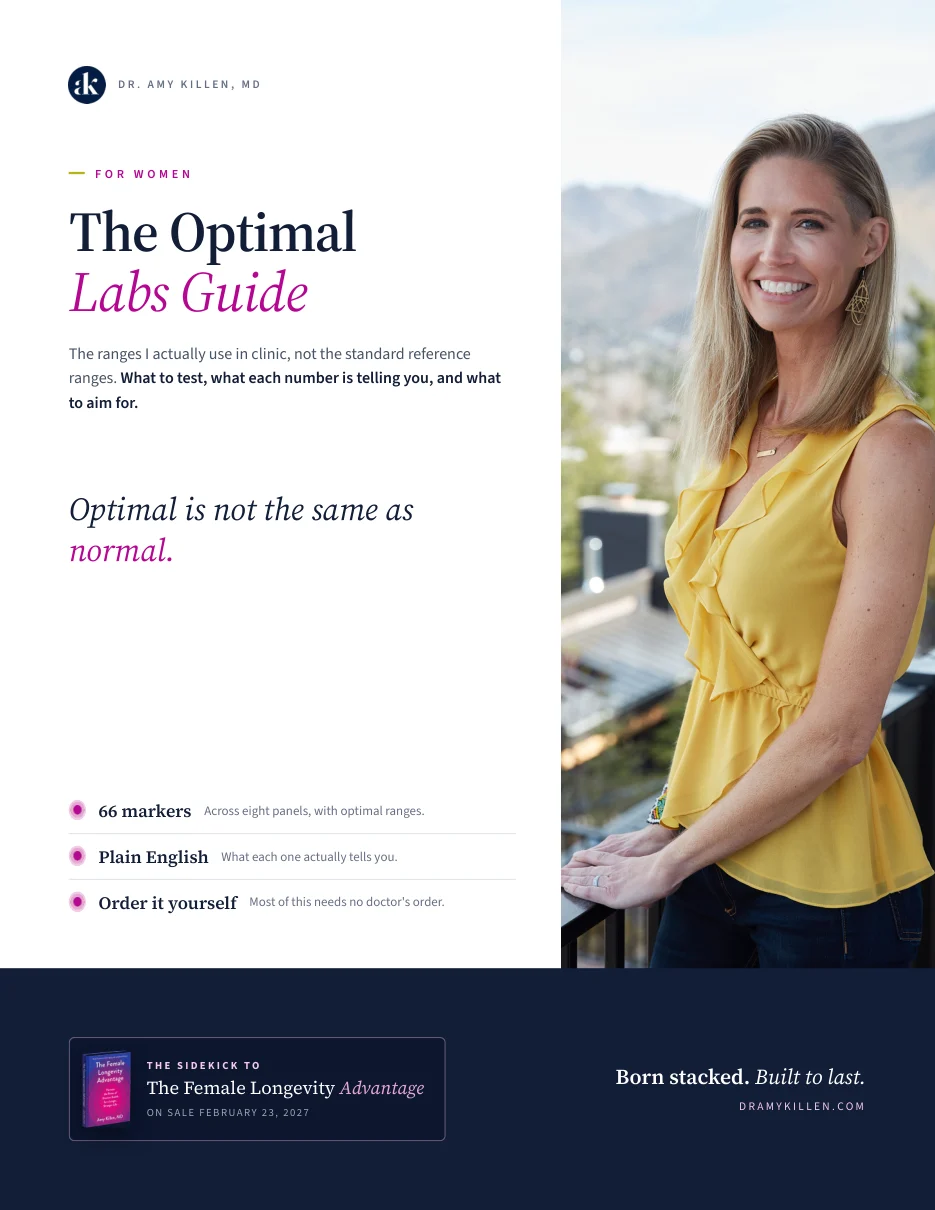
The ranges I actually use in clinic, not the standard reference ranges. Sixty-six markers across eight panels: what to test, what each number is telling you, and what to aim for.
Free, by email, in a couple of minutes. Newsletter subscribers only, unsubscribe anytime.
Your doctor says normal. You still feel terrible.
Brain fog. Fatigue. Weight gain. Low libido. Poor sleep. You get your labs done and your doctor says everything looks fine. But you know something is off. Here is the problem: “normal” lab reference ranges are built from population averages, not from what is optimal for health and function. A “normal” fasting insulin of 20 will not trigger a flag, but it is a metabolic red flag. A “normal” TSH of 4.5 is technically in range and can leave you dragging through your days.
I wrote this guide because my patients kept asking the same question: what should my labs actually be? This is my answer, the targets I use in my own clinics, based on current literature, not outdated reference ranges. These are standard blood tests any major lab can run and any doctor can order. You can order most of them yourself through direct-to-consumer lab services, and most are covered by insurance.
“Normal ranges include a lot of very sick people. You want optimal, not just not flagged.”Dr. Amy Killen, MD

Get the Optimal Labs Guide.
Your name and email, and it lands in your inbox with my free weekly notes on hormones.
- Sixty-six markers across eight panels, with the optimal range for each
- What each number is actually telling you, in plain English
- Which tests you can order yourself, and which need a doctor
- The tear-out panel to bring to your next appointment
Check your inbox.
Your Optimal Labs Guide is on its way. Look for it in the next minute or two, and check promotions if it is not in the main inbox.
Eight panels, one guide.
Hormones
Estradiol, progesterone, total and free testosterone, FSH, SHBG, DHEA-S: when in your cycle to draw each, and the optimal range.
Thyroid
TSH, free T3, free T4, and why a “normal” TSH can still be the reason you are tired.
Metabolic
Fasting insulin and glucose, A1c, and the numbers that flag trouble years before a diagnosis.
Cardiovascular
ApoB, Lp(a), and the lipid markers that actually predict risk in women.
Inflammation, iron, and vitamins
hsCRP, ferritin, vitamin D, B12, and the deficiencies that masquerade as menopause.
How to order and read them
Which tests you can order yourself, what to ask your doctor for by name, and how to bring the results to a conversation that changes your plan.
The labs tell you where you are. The book tells you where to go.
The Female Longevity Advantage. On sale February 23, 2027. Pre-orders open.
This guide is the sidekick. The book is the whole playbook: why women outlive men, why the ovary is the pacemaker of female aging, and exactly how to keep the advantage you were born with.
Pre-order the book, in any format, and three bonuses arrive by email, starting with my 14-page Midlife Hormone Field Guide.

Dr. Amy Killen, MD
Emergency physician turned longevity and hormone doctor. Creator of the HOT Provider Course, co-pioneer of the Full Body Stem Cell Makeover, 200K+ followers on Instagram, and the author of The Female Longevity Advantage (Little, Brown Spark, February 2027).








© 2026 Dr. Amy Killen, MD. All rights reserved.