
This post covers please mind gap lies. “Please mind the gap.”
If you’ve ever ridden the subway in London, you know that voice. The delightfully accented woman who comes over the PA before each stop, warning passengers to watch their step as they exit the train.
Every time I hear her, I think to myself: Yes. Why is nobody minding the gap? I’m so happy someone is finally talking about the gap.
Of course, she’s talking about the space between the train car and the platform. I’m talking about the space between his orgasm and yours. Spoiler: it’s wider than you think, and it’s not your fault.
In Part 1 of this series, we tackled the anatomy lies: the fact that your clitoris isn’t a tiny button, that it’s a massive internal organ with more nerve fibers than we ever realized, and that the amount of erectile tissue you have varies enormously from woman to woman. If you haven’t read it yet, start there, because everything in this installment builds on that foundation.
Now we’re getting into what happens (or, more accurately, what doesn’t happen) when women take that anatomy into the bedroom. The orgasm lies. The arousal lies. The myths that have convinced millions of women their bodies are broken when, in fact, the information they were given was broken/incomplete from the start.
Lie #1: “Penetrative sex should lead to orgasm.”
This might be the most destructive lie on this list because it has convinced millions of women that their bodies are defective. The research paints a different picture.
How often do heterosexual men orgasm during partnered sex? 95% of the time.
How often do heterosexual women orgasm during partnered sex? 65% of the time. And that gap doesn’t narrow with age or experience. It stays stubbornly, maddeningly wide across a woman’s entire lifespan.
What percentage of women orgasm during casual hook-up style sex? Only 10% of women climax during a first-time hookup. (No, it was NOT as good for me as it was for you!)
What percentage of women can orgasm from penetration alone? Somewhere between 18 and 25%, depending on the study. And… only 4% of women say penetration alone is their most reliable route to orgasm.
What do the other 96% say works? Clitoral stimulation. 93% of women who orgasm during partnered sex say their most reliable route involves it.
How often do lesbian women orgasm during partnered sex? 86% of the time. Not because they have different anatomy, but because their sexual encounters prioritize clitoral stimulation, last longer, and involve a wider variety of activities.
This isn’t a mystery. It’s not complicated. The sexual script that most heterosexual couples follow goes like this: brief foreplay, penetration, male orgasm, sex over. That script was not designed for women’s pleasure. It was designed around the penis. And it shows. The orgasm gap is not a biological gap. It’s a knowledge gap, a cultural gap, and a give-a-damn gap.

Lie #2: “The G-spot is a body part that every woman has.”
Ah, the G-spot. Named after German gynecologist Ernst Gräfenberg in 1981, based on a study of one woman who, it was later noted, also had a grade one cystocele (a condition where the bladder bulges into the vagina). Not exactly an ideal research subject for launching a global sexual theory.
A 2021 systematic review analyzed 31 studies and reached a more nuanced conclusion: the G-spot, as a discrete, identifiable anatomical structure, does not exist. What does exist is a functional zone involving the internal clitoris, the urethral sponge, the Skene’s glands (sometimes called the female prostate), and the anterior vaginal wall, all working together. Researchers call it the clitourethrovaginal (CUV) complex, which is a mouthful, but at least it describes the anatomy instead of honoring the man who studied one woman and called it a day.
It’s hormone-dependent, highly variable, and responsive to arousal. Some women have robust sensitivity in this region. Some women don’t. And both are entirely normal.
If you’ve ever Googled “how to find your G-spot” at 1 am and felt like a failure when the advice didn’t work, you weren’t failing. You were looking for something that doesn’t exist the way you were told it does. The damage of the G-spot myth isn’t that it created an erogenous zone where none existed. It’s that it created an expectation. An entire industry of toys and techniques sprang up around finding this magic button when the real issue was that we’d misunderstood the anatomy from the start. There is no button. There is a complex, variable, interconnected network of tissues. And it doesn’t work the same way in every woman. That’s not a bug. That’s biology.
Lie #3: “There’s such a thing as a ‘vaginal orgasm.’”
Sigmund Freud did a lot of damage across many areas, but this might be his worst gift to women. And the competition is stiff. He proposed that “clitoral orgasms” were immature and that psychologically healthy women should be able to achieve “vaginal orgasms” through penetration alone. This idea seeped into medicine, into sex education, into the bedroom, and into the psyches of women who then spent decades wondering what was wrong with them when penetration alone didn’t get them there.
Here’s what the science actually says: the “vaginal orgasm” is almost certainly a clitoral orgasm. O’Connell’s MRI work and subsequent research demonstrate that the internal structures of the clitoris (the crura and vestibular bulbs) wrap around the vaginal canal. During penetration, these structures are compressed against the vaginal wall. Women who orgasm from penetration are not bypassing the clitoris. They’re stimulating it from the inside.
And here’s the crucial part that ties back to Lie #2 from Part 1: the amount of internal erectile tissue varies significantly between women. Some women have vestibular bulbs that completely fill the space between the labia and the vaginal canal. Others have less tissue in that area. Women with more internal erectile tissue are more likely to experience pleasure and orgasm from penetration, not because they’re more skilled or more “mature” (thank you, Freud), but because they have more nerve-rich, blood-engorged tissue being compressed during intercourse. The women who need direct external clitoral stimulation don’t have an inferior orgasm or an immature orgasm. They have an orgasm. Full stop.

Lie #4: “Wet means turned on. Not wet means not turned on.”
Let’s start with the basics. Vaginal lubrication is primarily a vascular event. During arousal, increased blood flow to the pelvic tissues forces plasma through the vaginal walls in a process called transudation. Think of it like squeezing a wet sponge from the outside. The Bartholin’s glands pitch in a little, but the heavy lifting is all blood flow. Which means anything that affects blood flow, hormones, or vaginal tissue health will affect lubrication, regardless of how turned on she actually is.
The list of things that can tank lubrication while a woman is genuinely, enthusiastically aroused is absurdly long: declining estrogen (hello, perimenopause), antihistamines, antidepressants (especially SSRIs), hormonal contraceptives, dehydration, stress, smoking, autoimmune conditions, and even the time of day. So basically… being alive and over 35. Roughly 17% of women aged 18–50 report problems with vaginal dryness, and that number climbs to 57% after menopause. Yet 75% of those women never seek help because they’re embarrassed or assume it’s just something they have to live with.
Now flip the assumption. Surely if a woman is wet, she must be aroused? Also no. Meredith Chivers’ lab called “arousal concordance,” which is the degree to which your body’s response matches what your brain is actually feeling. In men, concordance runs about 66%. In women? 26%. Nearly three-quarters of the time, a woman’s physical genital response does not match what she’s actually experiencing mentally. She can be lubricated and not aroused. She can be deeply aroused and dry as the Sahara.
This matters for two reasons. First, it means that lubrication is a terrible proxy for consent, and the idea that a woman’s body “tells the truth” even when she says no is not just wrong, it’s dangerous. Second, it means that women who need lube are not broken, uninterested, or insufficiently attracted to their partner. They may have a hormonal issue. They may be on a medication. They may simply be one of the millions of women whose bodies don’t reliably produce visible evidence of what their brain is feeling.
Lube is not a failure. It’s a tool. Keep it in your nightstand. Keep it in your travel bag. Toss one in your purse right next to the emergency Advil and rogue-chin-hair-repairing tweezers.
Lie #5: “Using a vibrator will desensitize you.”
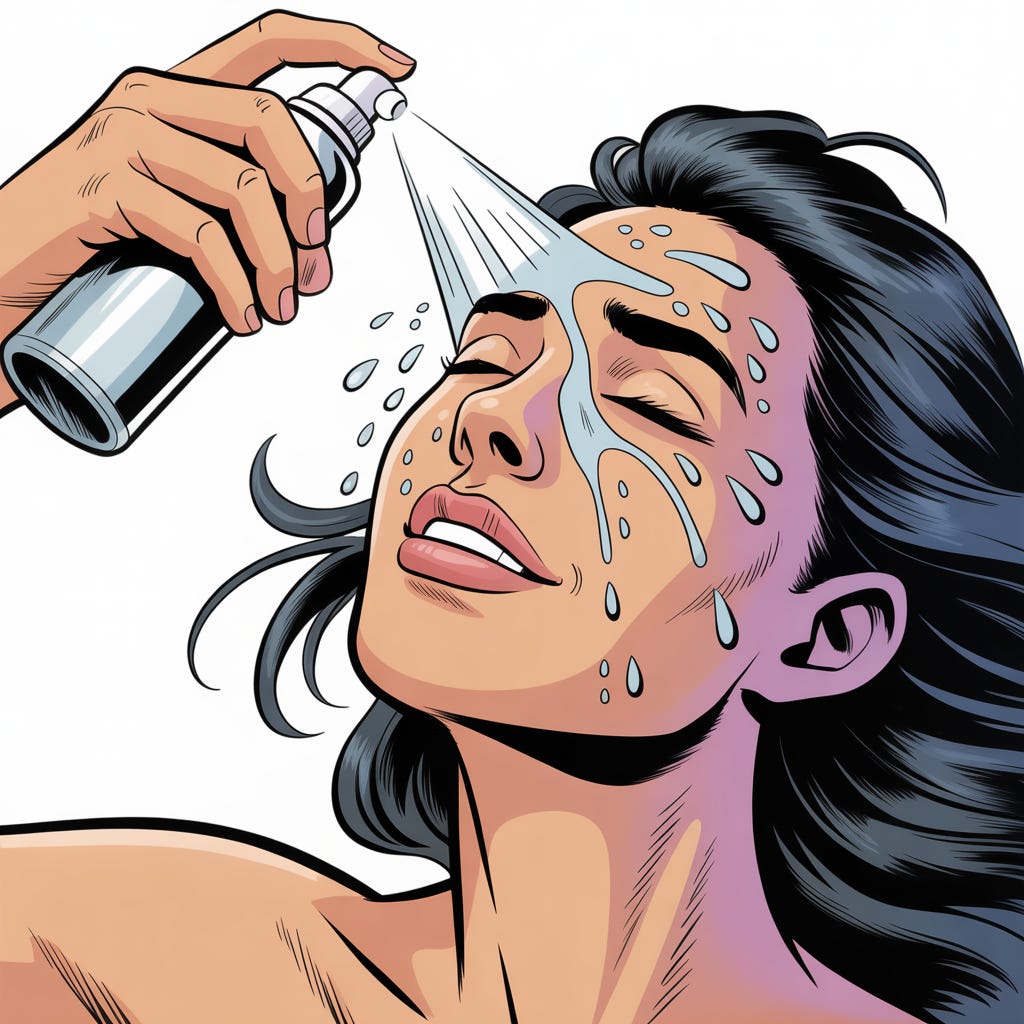
Urologist Dr. Kelly Casperson has a great analogy for this one. She says using a vibrator is like driving the car to the grocery store instead of walking. Choosing to drive (because it gets you there faster, because it’s more comfortable, because it’s more reliable) doesn’t prevent you from choosing to walk in the future. You can still walk. You’ll get there just fine.
The largest study to date on this question surveyed over 2,000 women in a nationally representative sample. The findings? 71.5% of vibrator users had never experienced any change in genital sensation. Of those who did notice something, the effect was mild and temporary, comparable to the brief numbness you’d get from any sustained stimulation, including manual. Less than 1% reported a change lasting longer than a day. And here’s the part that never makes it into the scary headlines: vibrator users scored higher on nearly every measure of sexual function, including desire, arousal, lubrication, and orgasm, compared to non-users.
A 2024 pilot study went further, finding that regular vibrator use actually improved sexual function, decreased pain and symptoms of pelvic organ prolapse, reduced depression scores, and lessened the severity of vaginal atrophy. That’s right. The thing women are being warned away from appears to actively improve the health of the tissues it’s supposedly destroying.
The myth of “dead vagina syndrome” (a term that is not recognized by any medical organization, by the way) persists for the same reason so many of these myths persist: we are deeply, culturally uncomfortable with women pursuing pleasure for its own sake. When a man uses a performance-enhancing tool, it’s a solution. When a woman uses one, it’s a crutch. When a man can’t finish, we prescribe. When a woman needs a specific type of stimulation, we pathologize. Make it make sense.
The female genital nerve beds are constantly restructuring. They are not a finite resource that gets “used up.” They are dynamic, living tissue. Physiologic dependence on a vibrator is about as likely as physiologic dependence on your electric toothbrush. Can you develop a preference for efficiency? Sure. That’s not dependency. That’s being a person with a nervous system who figured out what works.
Quick recap.
-
The orgasm gap is not a mystery. It’s the predictable result of a sexual script written around the penis.
-
The G-spot is not a button you can find with a treasure map. It’s a variable, hormone-dependent zone that works differently in every woman.
-
The “vaginal orgasm” is a clitoral orgasm accessed from a different zip code.
-
Wetness is not a proxy for desire; dryness is not a proxy for disinterest.
-
Your vibrator is not breaking you. It might actually be one of the best things you can do for your pelvic health.
Every single one of these myths has the same thing in common: they took something normal about female sexuality and repackaged it as a deficiency.
Next month, in Part 3, we’re going where these lies hit the hardest: midlife. Because if you think the misinformation is bad when you’re 30, wait until you’re 48 and your doctor tells you that painful sex is just part of getting older (“maybe have a glass of wine first”), or that your libido disappeared because you’re “not trying hard enough,” or that menopause means the end of good sex. It doesn’t. But you’re going to need some better information than what most women are getting, and that’s exactly what we’ll cover.
Are you a medical provider? Learn to prescribe hormone optimization therapy with the frameworks, protocols, and confidence you didn’t get in training.
Get Dr. Amy Killen’s Newsletter
Hormones, longevity, and regenerative medicine — straight talk from a physician who actually prescribes it. Free, weekly-ish, no spam.
This article was originally published on Dr. Amy Killen’s Substack newsletter. Subscribe for free to get new posts delivered to your inbox.